
Segrave Trophy
Segrave Trophy is an award for innovations in transport named after Henry Segrave. It was created in 1930.
- Country
- United Kingdom
- Created
- 1930
All 4 facts, and where they come from
Facts
4 facts · 0 confirmed by two sources · 0 cited · 4 from one source
Where this comes from
Papalocal keeps its own record. It started from these sources; what each one said is kept here as it was copied, so a change on their side never changes this page by itself. Tap one to read its version.
What Wikidata says · copied November 17, 2026 · revision 2570703016
- Described as
- award for innovations in transport named after Henry Segrave
- What it is
- award
- Created
- 1930 · 1 reference
- Country
- United Kingdom
- Official website
- https://www.royalautomobileclub.co.uk/motoring/trophies/the-segrave-trophy · 1 reference
- Wikipedias with a page
- 3
Wikidata item Q7446312 (wikidata.org/wiki/Q7446312), public domain (CC0). Copied 2026-11-17.
What Wikipedia says · copied November 17, 2026 · revision 1386191333
The Segrave Trophy is awarded to the British national who demonstrates "Outstanding Skill, Courage and Initiative on Land, Water and in the Air". The trophy is named in honour of Sir Henry Segrave, the first person to hold both the land and water speed records simultaneously. The award was established by Segrave's wife, Lady Doris, who was "determined to carry on his legacy". The trophy, designed by sculptor Gilbert Bayes, is awarded by the Royal Automobile Club. It has been awarded in most years since 1930; it is not presented if, in the opinion of the committee, no achievement has been sufficient to deserve the award. Past sponsors of the trophy include Castrol, Ford Motor Company and Aston Martin.
The inaugural recipient of the Segrave Trophy was Australian-born Charles Kingsford Smith who flew solo from Ireland to Newfoundland, across the Atlantic, in just over 31 hours. He also won the 1930 England to Australia air race, covering the distance solo in 13 days. British aviator Amy Johnson became the first female recipient of the trophy in 1932 when she was cited for her flight from London to Cape Town in a de Havilland Puss Moth. Since then, just five other women have won the award: Jean Batten (1936) for her solo 11-day flight from England to New Zealand, Fiona Gore (1980) for travelling in excess of 100 miles per hour (160 km/h) on water, Eve Jackson (1987) for her solo microlight flight from London to Sydney, Louise Aitken-Walker (1990) for her victory in the short-lived World Rally Championship Ladies Cup and Zara Rutherford (2022) as youngest woman to fly solo around the world. The Segrave Trophy has been presented posthumously on four occasions, to Geoffrey de Havilland Jr. (1946), Donald Campbell (1966), Bruce McLaren (1969) and Joey Dunlop (2000). One of the 2022 winners of the Segrave Trophy was pilot Mack Rutherford, who at the age of 17, is the youngest recipient of the award.
A subsidiary award, the Segrave Medal, may also be given to those individuals who have "played a fundamental role in helping the Segrave Trophy winner to achieve their goal". Peter Du Cane received the medal in 1939 for the design and construction of Blue Bird K4. Bruce McLaren's teammate Denny Hulme and their chief mechanic Cary Taylor won the medal in 1969, their team having won every race of the 1969 Can-Am season. In 1993, the car designer Eric Broadley was presented with the Segrave Medal for his work with Lola Cars. Mark Wilkinson received the medal in 2001 as co-pilot to trophy winner Tim Ellison, and Lady Moss, Stirling Moss's wife, won it in 2005 for her support of her husband. Audi's Wolfgang Ullrich, Tom Kristensen and Loïc Duval received the medal in 2013. Carlin founder Trevor Carlin won the Segrave Medal in 2018 for helping Monger return to motor racing. Additionally, the Segrave Certificate of Achievement may be awarded to a person who is not a British national, but would otherwise qualify for recognition. It has been presented just once, in 2002, to Bjørn Rune Gjelsten who was throttleman for powerboat racer Steve Curtis.
From the Wikipedia article “Segrave Trophy” (en.wikipedia.org/wiki/Segrave_Trophy), by its contributors, under CC BY-SA 4.0 (creativecommons.org/licenses/by-sa/4.0/). Copied 2026-11-17; not changed.
Confirmed Two sources agree. Cited One source, and it names where it got it. One source One source, without a reference of its own. Sources disagree The sources disagree. We show the best-supported value and keep theirs below.
People connected 16
Won it
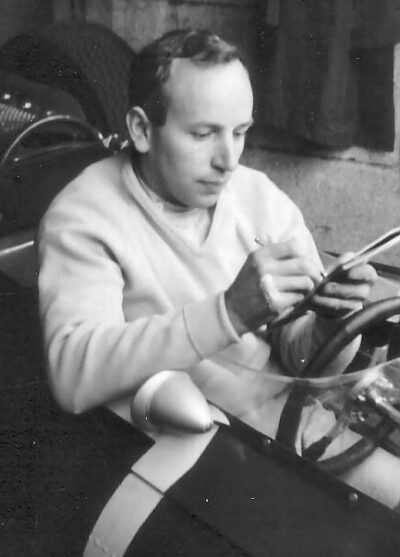 John Surtees (2012)British motorcycle and automobile racer (1934–2017)
 Adrian Newey (2010)British Formula One engineer
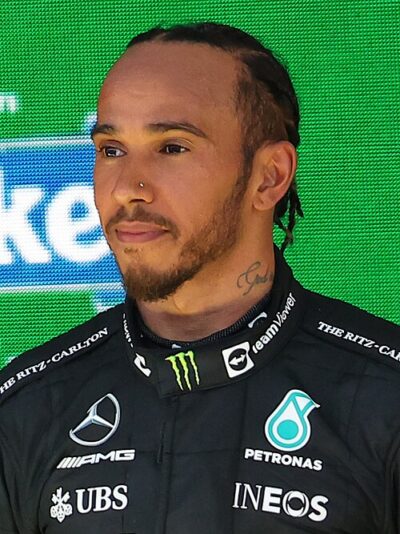 Lewis Hamilton (2007)British racing driver
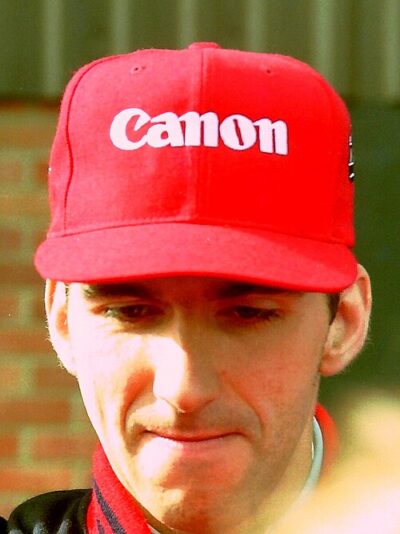 Damon Hill (1996)British racing driver
 Colin McRae (1995)British racing driver (1968–2007)
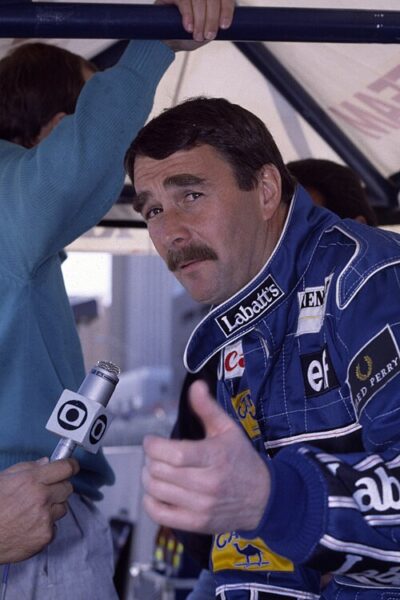 Nigel Mansell (1992)British racing driver (born 1953)
 Frank Williams (1992)founder of Williams Grand Prix Engineering (1942–2021)
 Martin Brundle (1988)British racecar driver
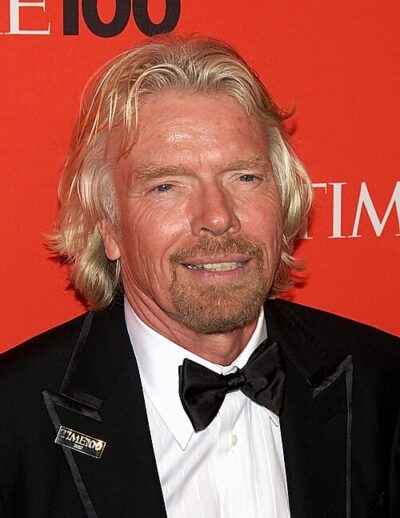 Richard Branson (1986)British business magnate
 Mike Hailwood (1979)British motorcycle racer and racing driver (1940–1981)
 Peter Collins (1976)British racing driver (1931-1958)
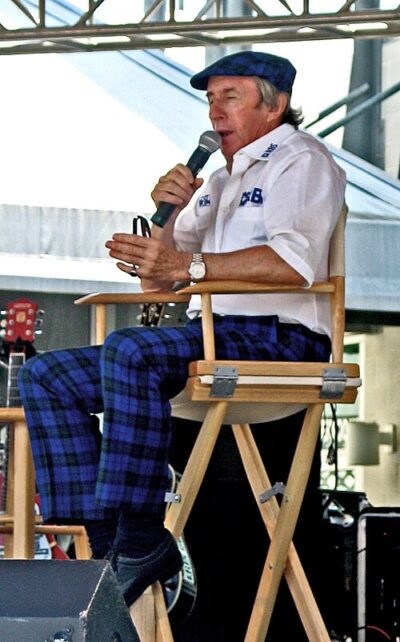 Jackie Stewart (1973)Scottish racing driver
 Bruce McLaren (1969)New Zealand racecar driver, designer and team owner (1937-1970)
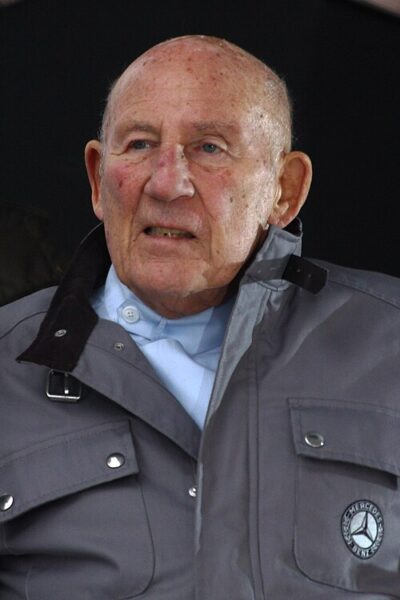 Stirling Moss (1957)British motor racing driver (1929-2020)
 Jean Batten (1936)New Zealand aviator (1909-1982)
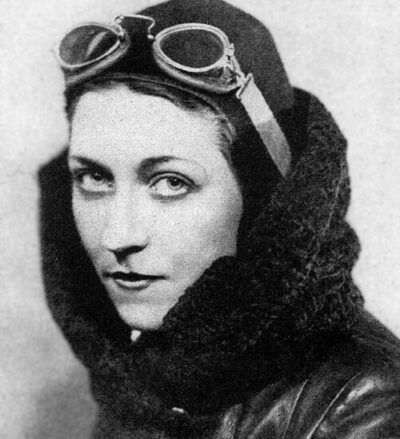 Amy Johnson (1932)pioneering English aviator (1903–1941)
