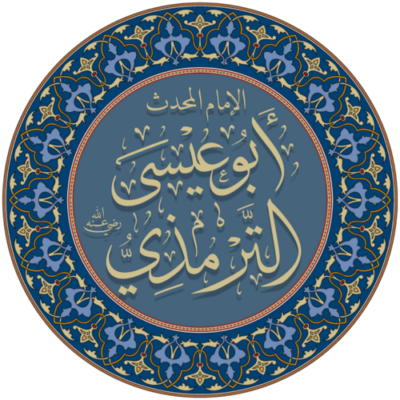
Shama'il Muhammadiyah
Shama'il Muhammadiyah is a Collection of Hadith. It was written by Abu Isa at-Tirmidhi.
- Written by
- Abu Isa at-Tirmidhi
All 3 facts, and where they come from
Facts
3 facts · 0 confirmed by two sources · 0 cited · 3 from one source
Where this comes from
Papalocal keeps its own record. It started from these sources; what each one said is kept here as it was copied, so a change on their side never changes this page by itself. Tap one to read its version.
What Wikidata says · copied November 17, 2026 · revision 2559383688
- Described as
- Collection of Hadith
- Other names
- Shamail Muhammadiyah, Shamail Muhammadiya
- What it is
- written work
- Written by
- Abu Isa at-Tirmidhi
- Language
- Arabic
- Wikipedias with a page
- 12
Wikidata item Q3315468 (wikidata.org/wiki/Q3315468), public domain (CC0). Copied 2026-11-17.
What Wikipedia says · copied November 17, 2026 · revision 1384353352
Ash-Shama'il al-Muhammadiyya (Arabic: الشمائل المحمدية, romanized: Ash-Shamāʾil al-Muḥammadiyya, lit. 'Virtues of Muhammad') is a collection of hadiths compiled by the 9th-century scholar al-Tirmidhi regarding the intricate details of the Islamic prophet Muhammad's life including his appearance, his belongings, his manners, and much more. The book contains 399 narrations from the successors of Muhammad which are divided into 56 chapters.
The best known and accepted of these hadith are attributed to Ali, cousin and son-in-law to Muhammad.
Another well-known description is attributed to a woman named Umm Ma'bad.
Other descriptions are attributed to Aisha, `Abd Allah ibn `Abbas, Abu Hurairah and Hasan ibn Ali. While shama'il lists the physical and spiritual characteristics of Muhammad in simple prose, in hilya these are written about in a literary style.
Among other descriptive Shama'il text are the Dala'il al-Nubuwwah of Al-Bayhaqi, Tarih-i Isfahan of Abu Naeem Isfahani, Al-Wafa bi Fadha'il al-Mustafa of Abu'l-Faraj ibn al-Jawzi and Al-Shifa of Qadi Ayyad are the main shemaa-il and hilya books.
From the Wikipedia article “Shama'il Muhammadiyya” (en.wikipedia.org/wiki/Shama'il_Muhammadiyya), by its contributors, under CC BY-SA 4.0 (creativecommons.org/licenses/by-sa/4.0/). Copied 2026-11-17; not changed.
Confirmed Two sources agree. Cited One source, and it names where it got it. One source One source, without a reference of its own. Sources disagree The sources disagree. We show the best-supported value and keep theirs below.