Sharon Jones & The Dap-Kings
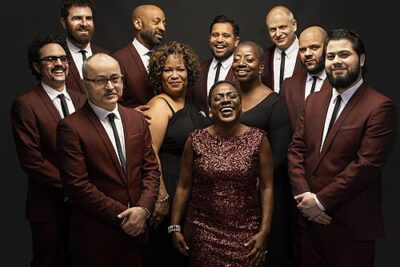
Sharon Jones & The Dap-Kings is an American funk/soul band. It was founded in 1996.
- Founded
- 1996
- Genre
- funk
- Record label
- Daptone Records
- Country of origin
- United States
All 7 facts, and where they come from
Facts
7 facts · 0 confirmed by two sources · 1 cited · 6 from one source
Where this comes from
Papalocal keeps its own record. It started from these sources; what each one said is kept here as it was copied, so a change on their side never changes this page by itself. Tap one to read its version.
What Wikidata says · copied November 17, 2026 · revision 2562639196
- Described as
- American funk/soul band
- Other names
- Sharon Jones and The Dap-Kings
- What it is
- musical group
- Genre
- funk; deep funk revival · 1 reference
- Country of origin
- United States
- Record label
- Daptone Records
- Founded
- 1996
- Official website
- http://sharonjonesandthedapkings.com
- Wikipedias with a page
- 8
Wikidata item Q3288013 (wikidata.org/wiki/Q3288013), public domain (CC0). Copied 2026-11-17.
What Wikipedia says · copied November 17, 2026 · revision 1374143461
Sharon Jones & the Dap-Kings were an American funk and soul band signed to Daptone Records. They were part of a revival movement of mid-1960s to mid-1970s style funk and soul music. They released their debut album, Dap Dippin', in 2002, the first of seven studio albums. Their 2014 album Give the People What They Want was nominated for the Grammy Award for Best R&B Album. After Sharon Jones' death in 2016, the band released the posthumous album Soul of a Woman in 2017 and a compilation of cover songs in 2020.
The Dap-Kings, the Daptone house band, are notable for their collaborations with Mark Ronson, including their contributions to Amy Winehouse's Back to Black. The band continued to work and perform together through 2018.
From the Wikipedia article “Sharon Jones & the Dap-Kings” (en.wikipedia.org/wiki/Sharon_Jones_&_the_Dap-Kings), by its contributors, under CC BY-SA 4.0 (creativecommons.org/licenses/by-sa/4.0/). Copied 2026-11-17; not changed.
Confirmed Two sources agree. Cited One source, and it names where it got it. One source One source, without a reference of its own. Sources disagree The sources disagree. We show the best-supported value and keep theirs below.
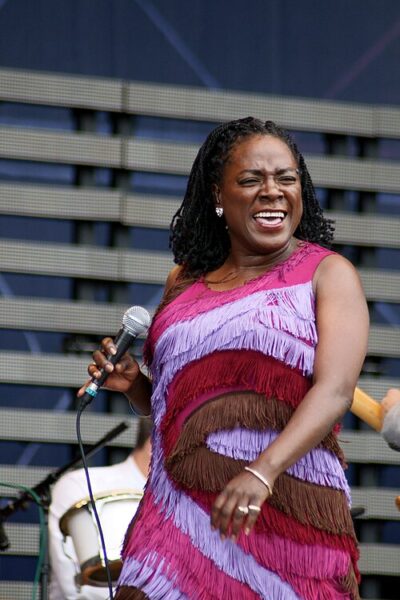
Picture: Jacob Blickenstaff, via Wikimedia Commons · CC BY-SA 4.0