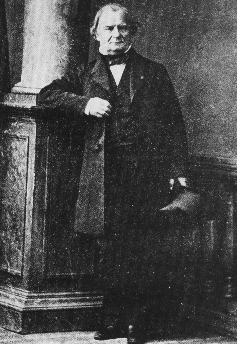
Sharp, Stewart and Company
The Sharp, Stewart and Company is a defunct British locomotive manufacturer. It was founded in 1843 by Richard Roberts. Its headquarters are in Manchester.
- Founded
- 1843
- Founded by
- Richard Roberts
- Headquarters
- Manchester (1843–1888)
- Industry
- locomotive manufacturing
- Country
- United Kingdom
All 9 facts, and where they come from
Facts
9 facts · 0 confirmed by two sources · 0 cited · 9 from one source
Where this comes from
Papalocal keeps its own record. It started from these sources; what each one said is kept here as it was copied, so a change on their side never changes this page by itself. Tap one to read its version.
What Wikidata says · copied November 17, 2026 · revision 2517937753
- Described as
- defunct British locomotive manufacturer
- Other names
- Sharp Stewart, Sharp, Roberts & Co., Sharp Brothers and Company
- What it is
- business
- Comes after
- Clyde Locomotive Company
- Followed by
- North British Locomotive Company
- Founded
- 1843
- Ended
- 1903
- Founded by
- Richard Roberts
- Headquarters
- Manchester (1843–1888)
- Country
- United Kingdom
- Industry
- locomotive manufacturing
- Wikipedias with a page
- 10
Wikidata item Q476988 (wikidata.org/wiki/Q476988), public domain (CC0). Copied 2026-11-17.
What Wikipedia says · copied November 17, 2026 · revision 1384449056
Sharp, Stewart and Company was a steam locomotive manufacturer, originally based in Manchester, England. The company was established in 1843 following the dissolution of Sharp, Roberts & Co.. In 1888, it relocated to Glasgow, Scotland, where it later amalgamated with two other Glasgow-based locomotive manufacturers to form the North British Locomotive Company.
From the Wikipedia article “Sharp, Stewart and Company” (en.wikipedia.org/wiki/Sharp,_Stewart_and_Company), by its contributors, under CC BY-SA 4.0 (creativecommons.org/licenses/by-sa/4.0/). Copied 2026-11-17; not changed.
Confirmed Two sources agree. Cited One source, and it names where it got it. One source One source, without a reference of its own. Sources disagree The sources disagree. We show the best-supported value and keep theirs below.