Shenzhen
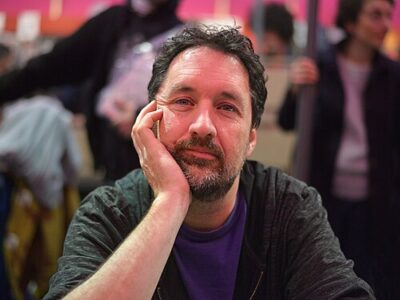
Shenzhen is a graphic novel by the Canadian Québécois author Guy Delisle.
- Written by
- Guy Delisle
- Genre
- graphic novel
- Country of origin
- France
All 6 facts, and where they come from
Facts
6 facts · 0 confirmed by two sources · 0 cited · 6 from one source
Where this comes from
Papalocal keeps its own record. It started from these sources; what each one said is kept here as it was copied, so a change on their side never changes this page by itself. Tap one to read its version.
What Wikidata says · copied November 17, 2026 · revision 2429547112
- Described as
- graphic novel by the Canadian Québécois author Guy Delisle
- What it is
- comic book album
- Written by
- Guy Delisle
- Publisher
- Drawn & Quarterly
- Genre
- graphic novel
- Language
- French · 1 reference
- Country of origin
- France
- Wikipedias with a page
- 4
Wikidata item Q2278115 (wikidata.org/wiki/Q2278115), public domain (CC0). Copied 2026-11-17.
What Wikipedia says · copied November 17, 2026 · revision 1384288450
Shenzhen: A Travelogue from China is a comic book written by the Canadian Québécois author Guy Delisle. It documents Delisle's three-month deployment in December 1997 to Shenzhen, a big city developed by the People's Republic of China near Hong Kong. In the city, he acts as the liaison between Dupuis, a Belgian animation production company and a Chinese studio, where Chinese animators draw child-oriented films (Papyrus) from the layout phase taking the French storyboards as a guide.
He struggles with boredom, the difficulties of outsourcing and the culture shock of a Westerner in this profit-oriented Chinese city. The book has 145 pages. Some of the frames are drawn by Chinese artists and by a friend of Delisle's.
From the Wikipedia article “Shenzhen: A Travelogue from China” (en.wikipedia.org/wiki/Shenzhen:_A_Travelogue_from_China), by its contributors, under CC BY-SA 4.0 (creativecommons.org/licenses/by-sa/4.0/). Copied 2026-11-17; not changed.
Confirmed Two sources agree. Cited One source, and it names where it got it. One source One source, without a reference of its own. Sources disagree The sources disagree. We show the best-supported value and keep theirs below.