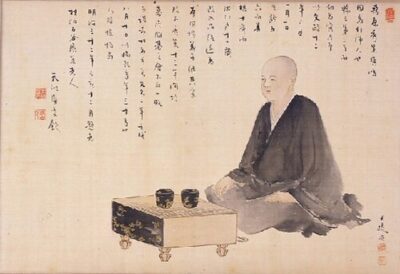
Shusaku opening
Shusaku opening is a Go opening. It was created by Honinbo Shusaku.
- Came out
- 19th century
- Created by
- Honinbo Shusaku
All 5 facts, and where they come from
Facts
5 facts · 0 confirmed by two sources · 0 cited · 5 from one source
Where this comes from
Papalocal keeps its own record. It started from these sources; what each one said is kept here as it was copied, so a change on their side never changes this page by itself. Tap one to read its version.
What Wikidata says · copied November 18, 2026 · revision 2064765868
- Described as
- Go opening
- Other names
- Shusaku fuseki
- What it is
- fuseki
- Created by
- Honinbo Shusaku
- Came out
- 19th century
- Sport
- go
- Named after
- Honinbo Shusaku
- Wikipedias with a page
- 8
Wikidata item Q3488900 (wikidata.org/wiki/Q3488900), public domain (CC0). Copied 2026-11-18.
What Wikipedia says · copied November 18, 2026 · revision 1376137818
The Shusaku opening, or Shusaku fuseki (秀策流布石), is a famous traditional fuseki for black stones in the game of Go. It was developed to perfection (but not invented) by Honinbo Shusaku and passed down to the Meiji, Taishō, and Shōwa eras.
With its variants, it constituted the basis of the major theories of fuseki for nearly a century, until the 1930s, at which point the introduction of komidashi and major innovations under the shinfuseki opening occurred. However, as a testimony to its effectiveness, this type of opening is still played by professionals when playing without a komi handicap.
The orthodox Shusaku fuseki is as follows:Move 7 is Shusaku's famous kosumi, which, Shusaku said, would not be a bad move no matter how Go theories develop.
The opening was displayed in a Google doodle on 6 June 2014 – the 185th anniversary of Honinbo Shusaku's birth.
From the Wikipedia article “Shusaku opening” (en.wikipedia.org/wiki/Shusaku_opening), by its contributors, under CC BY-SA 4.0 (creativecommons.org/licenses/by-sa/4.0/). Copied 2026-11-18; not changed.
Confirmed Two sources agree. Cited One source, and it names where it got it. One source One source, without a reference of its own. Sources disagree The sources disagree. We show the best-supported value and keep theirs below.