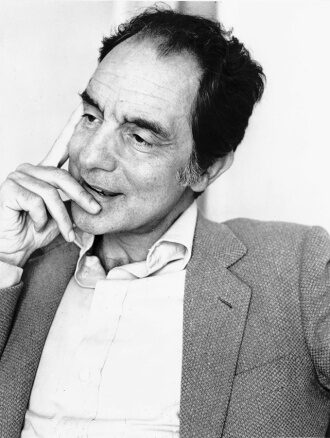
Six Memos for the Next Millennium
Six Memos for the Next Millennium is an essay by Italo Calvino. It came out in 1988.
- Published
- 1988
- Written by
- Italo Calvino
- Genre
- essay
- Country of origin
- Italy
All 7 facts, and where they come from
Facts
7 facts · 0 confirmed by two sources · 0 cited · 7 from one source
Where this comes from
Papalocal keeps its own record. It started from these sources; what each one said is kept here as it was copied, so a change on their side never changes this page by itself. Tap one to read its version.
What Wikidata says · copied November 17, 2026 · revision 2433109609
- Described as
- essay by Italo Calvino
- What it is
- written work; monograph
- Written by
- Italo Calvino
- Genre
- essay
- Published
- 1988
- Language
- Italian
- Country of origin
- Italy
- Wikipedias with a page
- 4
Wikidata item Q877418 (wikidata.org/wiki/Q877418), public domain (CC0). Copied 2026-11-17.
What Wikipedia says · copied November 17, 2026 · revision 1384992699
Six Memos for the Next Millennium (Italian: Lezioni americane. Sei proposte per il prossimo millennio) is a book based on a series of lectures written by Italo Calvino for the Charles Eliot Norton Lectures at Harvard, though Calvino died before delivering them. The lectures were written in Italian but were to be given in English in the fall of 1985. There have been two English translations, the first by Patrick Creagh, published in 1988, and the second by Geoffrey Brock, published in 2016.
The "memos" are lectures on certain literary qualities whose virtues Calvino wished to recommend to the then-approaching millennium. He intended to devote one lecture to each of six qualities: lightness, quickness, exactitude, visibility, multiplicity, and consistency. Though he completed the first five, he died before writing the last.
From the Wikipedia article “Six Memos for the Next Millennium” (en.wikipedia.org/wiki/Six_Memos_for_the_Next_Millennium), by its contributors, under CC BY-SA 4.0 (creativecommons.org/licenses/by-sa/4.0/). Copied 2026-11-17; not changed.
Confirmed Two sources agree. Cited One source, and it names where it got it. One source One source, without a reference of its own. Sources disagree The sources disagree. We show the best-supported value and keep theirs below.