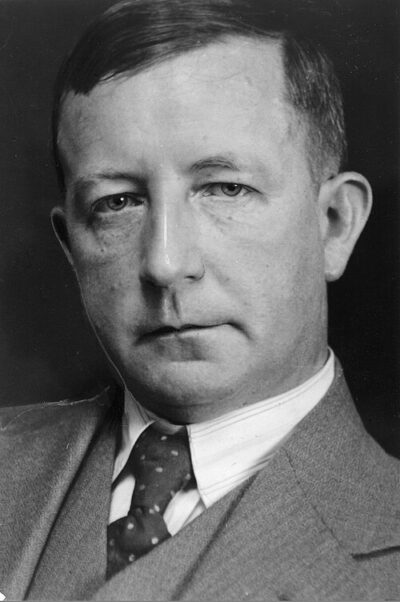
Skolem's paradox
Skolem's paradox is the paradox that there are countable models of theories that assert the existence of uncountable sets.
All 3 facts, and where they come from
Facts
3 facts · 0 confirmed by two sources · 0 cited · 3 from one source
Where this comes from
Papalocal keeps its own record. It started from these sources; what each one said is kept here as it was copied, so a change on their side never changes this page by itself. Tap one to read its version.
What Wikidata says · copied November 18, 2026 · revision 2433929743
- Described as
- the paradox that there are countable models of theories that assert the existence of uncountable sets
- What it is
- paradox; mathematical concept
- Named after
- Thoralf Skolem
- Wikipedias with a page
- 11
Wikidata item Q1096353 (wikidata.org/wiki/Q1096353), public domain (CC0). Copied 2026-11-18.
What Wikipedia says · copied November 18, 2026 · revision 1368405697
In mathematical logic and philosophy, Skolem's paradox is the apparent contradiction that a countable model of first-order set theory could contain an uncountable set. The paradox arises from part of the Löwenheim–Skolem theorem; Thoralf Skolem was the first to discuss the seemingly contradictory aspects of the theorem, and to discover the relativity of set-theoretic notions now known as non-absoluteness. Although it is not an actual antinomy like Russell's paradox, the result is typically called a paradox and was described as a "paradoxical state of affairs" by Skolem.
In model theory, a model corresponds to a specific interpretation of a formal language or theory. It consists of a domain (a set of objects) and an interpretation of the symbols and formulas in the language, such that the axioms of the theory are satisfied within this structure. The Löwenheim–Skolem theorem shows that any model of set theory in first-order logic, if it is consistent, has an equivalent model that is countable. This appears contradictory, because Georg Cantor proved that there exist sets which are not countable. Thus the seeming contradiction is that a model that is itself countable, and which therefore contains only countable sets, satisfies the first-order sentence that intuitively states "there are uncountable sets".
A mathematical explanation of the paradox, showing that it is not a true contradiction in mathematics, was first given in 1922 by Skolem. He explained that the countability of a set is not absolute, but relative to the model in which the cardinality is measured. Skolem's work was harshly received by Ernst Zermelo, who argued against the limitations of first-order logic and Skolem's notion of "relativity," but the result quickly came to be accepted by the mathematical community.
The philosophical implications of Skolem's paradox have received much study. One line of inquiry questions whether it is accurate to claim that any first-order sentence actually states "there are uncountable sets". This line of thought can be extended to question whether any set is uncountable in an absolute sense. More recently, scholars such as Hilary Putnam have introduced the paradox and Skolem's concept of relativity to the study of the philosophy of language.
From the Wikipedia article “Skolem's paradox” (en.wikipedia.org/wiki/Skolem's_paradox), by its contributors, under CC BY-SA 4.0 (creativecommons.org/licenses/by-sa/4.0/). Copied 2026-11-18; not changed.
Confirmed Two sources agree. Cited One source, and it names where it got it. One source One source, without a reference of its own. Sources disagree The sources disagree. We show the best-supported value and keep theirs below.