
Social Democratic Party
The Social Democratic Party is a centre-right political party in Portugal. It was founded in 1974 by Francisco de Sá Carneiro. Its headquarters are in Lisbon. It stands for Christian democracy, liberal conservatism and conservative liberalism.
- Country
- Portugal
- Founded
- May 6, 1974
- Ideology
- Christian democracy
All 13 facts, and where they come from
Facts
13 facts · 0 confirmed by two sources · 0 cited · 13 from one source
Where this comes from
Papalocal keeps its own record. It started from these sources; what each one said is kept here as it was copied, so a change on their side never changes this page by itself. Tap one to read its version.
What Wikidata says · copied November 17, 2026 · revision 2549149345
- Described as
- centre-right political party in Portugal
- Other names
- Partido Social Democrata, PSD
- What it is
- political party; social democratic party
- Founded
- May 6, 1974
- Founded by
- Francisco de Sá Carneiro
- Headquarters
- Lisbon
- Country
- Portugal
- Chair
- Rui Rio (2018–2022); Luís Montenegro (2022–)
- Ideology
- Christian democracy; liberal conservatism; conservative liberalism; Third Way
- Official website
- http://www.psd.pt/
- Wikipedias with a page
- 39
Wikidata item Q595575 (wikidata.org/wiki/Q595575), public domain (CC0). Copied 2026-11-17.
What Wikipedia says · copied November 17, 2026 · revision 1386068005
The Social Democratic Party (Portuguese: Partido Social Democrata [pɐɾˈtiðu susiˈal dɨmuˈkɾatɐ], PSD) is a liberal-conservative political party in Portugal. Commonly known by its colloquial initials PSD, on ballot papers its initials appear as its official form PPD/PSD, with the first three letters coming from the party's original name, the Democratic People's Party (Partido Popular Democrático, PPD). A party of the centre-right, the PSD is one of the three major parties in Portuguese politics, its rivals being the Socialist Party (PS) on the centre-left and the far-right Chega (CH) party.
The PSD was founded in 1974, two weeks after the Carnation Revolution. In 1976, the party adopted its current name. In 1979, the PSD allied with centre-right parties to form the Democratic Alliance and won that year's election. One year later, the party's founder and then Prime Minister, Francisco Sá Carneiro died in a plane crash. After the 1983 general election, the party formed a grand coalition with the Socialist Party, known as the Central Bloc, before winning the 1985 general election under new leader Aníbal Cavaco Silva, who shifted the party to the right. Cavaco Silva served as prime minister for ten years, instituting major economic liberalisation and winning two landslide victories. After he stepped down, the PSD lost the 1995 election. The party was returned to power under José Manuel Durão Barroso in 2002, but was defeated in the 2005 election. The party was able to return to power after the 2011 elections and four years later was able to win a plurality in the 2015 legislative election, winning 107 seats in the Assembly of the Republic in alliance with the CDS – People's Party, but being unable to form a minority government and went back to the opposition. Nine years later, in 2024, the party returned to power as a minority government, under a rebranded Democratic Alliance coalition, alongside CDS–PP and the People's Monarchist Party (PPM), a mandate that was renewed in May 2025. The party elected its current leader, Luís Montenegro, on 28 May 2022. Since the 2024 election, Montenegro has been the incumbent prime minister of Portugal.
Originally a social democratic party, the PSD became the main centre-right, conservative party in Portugal. The PSD is a member of the European People's Party and the Centrist Democrat International. Until 1996, the PSD belonged to the European Liberal Democrat and Reform Party and Liberal International. The party publishes the weekly Povo Livre (Free People) newspaper.
From the Wikipedia article “Social Democratic Party (Portugal)” (en.wikipedia.org/wiki/Social_Democratic_Party_(Portugal)), by its contributors, under CC BY-SA 4.0 (creativecommons.org/licenses/by-sa/4.0/). Copied 2026-11-17; not changed.
Confirmed Two sources agree. Cited One source, and it names where it got it. One source One source, without a reference of its own. Sources disagree The sources disagree. We show the best-supported value and keep theirs below.
People connected 9
Party members
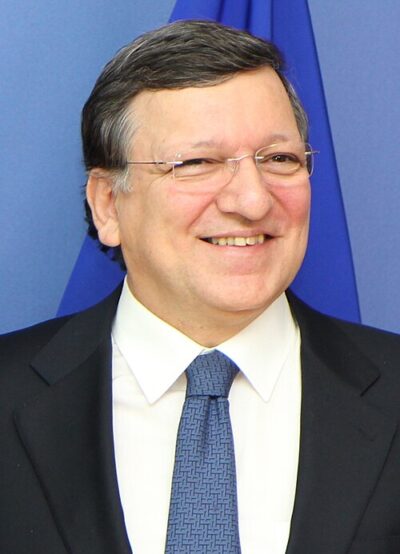 José Manuel Durão Barroso (1976–)Portuguese politician (born 1956)
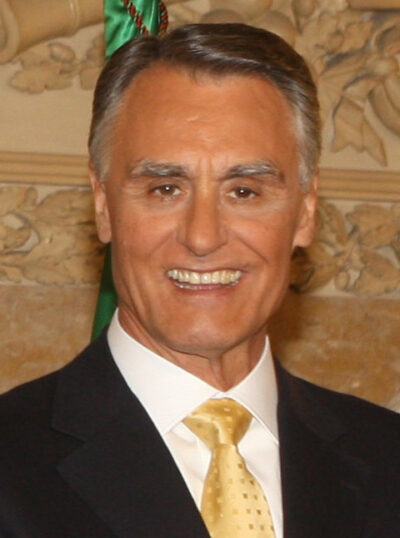 Aníbal Cavaco SilvaPortuguese economist and politician (born 1939)
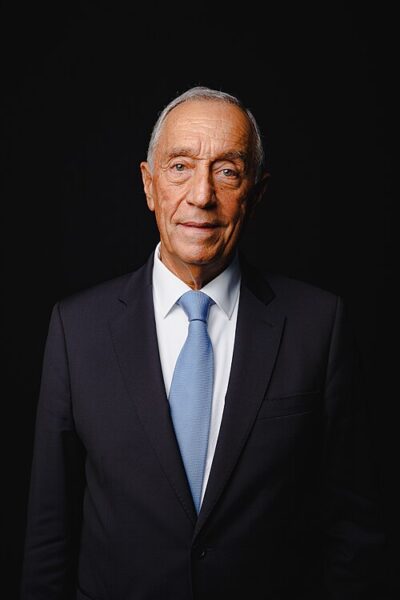 Marcelo Rebelo de SousaPortuguese politician and academic, former President of Portugal
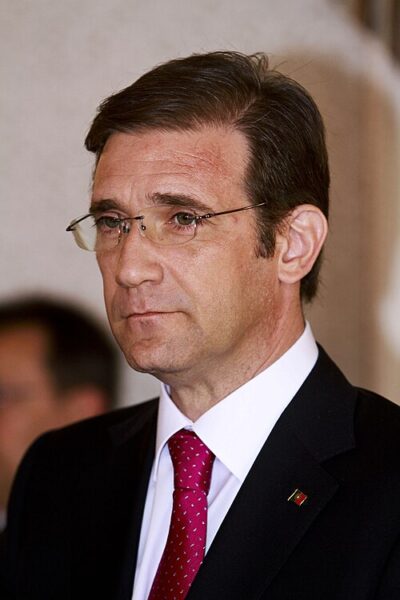 Pedro Passos Coelhoformer Prime Minister of Portugal
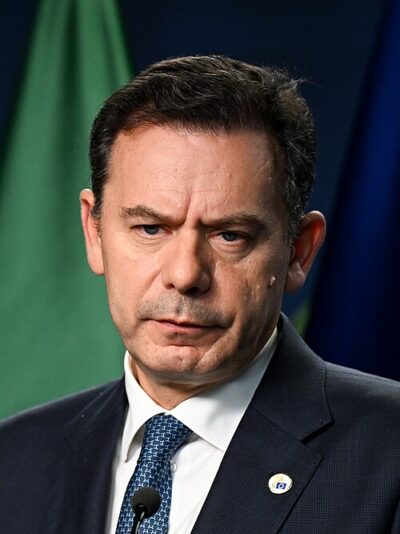 Luís MontenegroPortuguese politician (1973–), the 199th prime minister of Portugal (2024–)
 Pedro Santana Lopes (–2018)Portuguese lawyer and politician (born 1956)
 Francisco de Sá CarneiroPortuguese politician (1934–1980)
 Francisco Pinto BalsemãoPortuguese politician
 André Ventura (–2018)Portuguese politician and Member of Parliament for the Lisbon District of Portugal and State Councillor of Portugal
