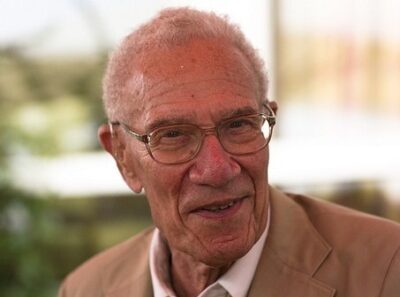
Solow–Swan model
Solow–Swan model is a neoclassical model of long-run economic growth based on at capital accumulation, labor or population growth, and increases in productivity due to technological progress.
All 3 facts, and where they come from
Facts
3 facts · 0 confirmed by two sources · 0 cited · 3 from one source
Where this comes from
Papalocal keeps its own record. It started from these sources; what each one said is kept here as it was copied, so a change on their side never changes this page by itself. Tap one to read its version.
What Wikidata says · copied November 16, 2026 · revision 2473890458
- Described as
- neoclassical model of long-run economic growth based on at capital accumulation, labor or population growth, and increases in productivity due to technological progress
- Other names
- neoclassical growth model, Solow model, exogenous growth model
- What it is
- economic model
- Named after
- Robert Solow; Trevor Swan
- Wikipedias with a page
- 25
Wikidata item Q777494 (wikidata.org/wiki/Q777494), public domain (CC0). Copied 2026-11-16.
What Wikipedia says · copied November 16, 2026 · revision 1381324869
The Solow–Swan model or exogenous growth model is an economic model of long-run economic growth. It attempts to explain long-run economic growth by looking at capital accumulation, labor or population growth, and increases in productivity largely driven by technological progress. At its core, it is an aggregate production function, often specified to be of Cobb–Douglas type, which enables the model "to make contact with microeconomics". The model was developed independently by Robert Solow and Trevor Swan in 1956, and superseded the Keynesian Harrod–Domar model.
Mathematically, the Solow–Swan model is a nonlinear system consisting of a single ordinary differential equation that models the evolution of the per capita stock of capital. Due to its particularly attractive mathematical characteristics, Solow–Swan proved to be a convenient starting point for various extensions. For instance, in 1965, David Cass and Tjalling Koopmans integrated Frank Ramsey's analysis of consumer optimization, thereby endogenizing the saving rate, to create what is now known as the Ramsey–Cass–Koopmans model.
From the Wikipedia article “Solow–Swan model” (en.wikipedia.org/wiki/Solow–Swan_model), by its contributors, under CC BY-SA 4.0 (creativecommons.org/licenses/by-sa/4.0/). Copied 2026-11-16; not changed.
Confirmed Two sources agree. Cited One source, and it names where it got it. One source One source, without a reference of its own. Sources disagree The sources disagree. We show the best-supported value and keep theirs below.