
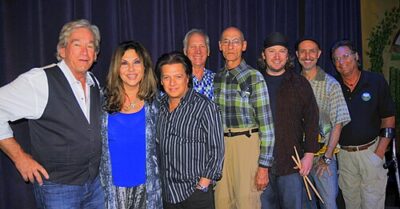
Sons of Champlin
Sons of Champlin is an American rock band. It was founded in 1965.
- Founded
- 1965
- Genre
- rhythm and blues
- Record label
- Capitol Records
- Country of origin
- United States
All 9 facts, and where they come from
Facts
9 facts · 0 confirmed by two sources · 0 cited · 9 from one source
Where this comes from
Papalocal keeps its own record. It started from these sources; what each one said is kept here as it was copied, so a change on their side never changes this page by itself. Tap one to read its version.
What Wikidata says · copied November 17, 2026 · revision 2550296399
- Described as
- American rock band
- Other names
- The Sons, The Opposite of Sex, Yogi Phelem, The Nu Boogaloo Express, The Masterbeats, The Sons Of Champlin
- What it is
- musical group
- Genre
- rhythm and blues; psychedelic rock; funk
- Country of origin
- United States
- Record label
- Capitol Records; Columbia Records
- Founded
- 1965
- Official website
- http://www.sonsofchamplin.com/news.htm
- Wikipedias with a page
- 4
Wikidata item Q7562298 (wikidata.org/wiki/Q7562298), public domain (CC0). Copied 2026-11-17.
What Wikipedia says · copied November 17, 2026 · revision 1380630327
The Sons of Champlin are an American rock band, from Marin County, California, in the San Francisco Bay Area, formed in 1965. They are fronted by vocalist-keyboardist-guitarist Bill Champlin, who, after leaving the group in 1977, joined the rock band Chicago from 1981 to 2009, reforming the Sons of Champlin in 1997. They brought to the late ‘60s music scene in the Bay Area a soulful sound built around a horn section, Hammond B3 organ, sophisticated arrangements, philosophical themes, Bill Champlin's songwriting and blue-eyed soul singing, and Terry Haggerty's unique jazz-based guitar soloing. They are one of the enduring 1960s San Francisco bands, along with Jefferson Airplane, the Grateful Dead and Moby Grape.
From the Wikipedia article “Sons of Champlin” (en.wikipedia.org/wiki/Sons_of_Champlin), by its contributors, under CC BY-SA 4.0 (creativecommons.org/licenses/by-sa/4.0/). Copied 2026-11-17; not changed.
Confirmed Two sources agree. Cited One source, and it names where it got it. One source One source, without a reference of its own. Sources disagree The sources disagree. We show the best-supported value and keep theirs below.
Picture: Craigcarreno, via Wikimedia Commons · CC BY-SA 4.0
