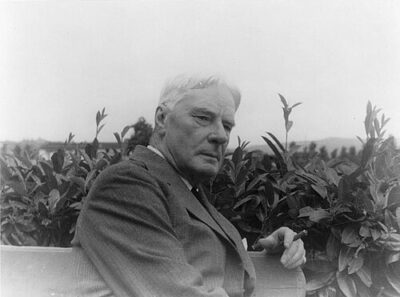
South Wind
South Wind is a 1917 novel by Norman Douglas.
- Published
- 1917
- Written by
- Norman Douglas
- Genre
- philosophical novel
- Country of origin
- United Kingdom
All 7 facts, and where they come from
Facts
7 facts · 0 confirmed by two sources · 0 cited · 7 from one source
Where this comes from
Papalocal keeps its own record. It started from these sources; what each one said is kept here as it was copied, so a change on their side never changes this page by itself. Tap one to read its version.
What Wikidata says · copied November 18, 2026 · revision 2568579024
- Described as
- 1917 novel by Norman Douglas
- What it is
- literary work
- Written by
- Norman Douglas
- Genre
- philosophical novel; satirical novel
- Published
- 1917
- Language
- English
- Country of origin
- United Kingdom · 1 reference
- Wikipedias with a page
- 5
Wikidata item Q1236743 (wikidata.org/wiki/Q1236743), public domain (CC0). Copied 2026-11-18.
What Wikipedia says · copied November 18, 2026 · revision 1384304912
South Wind is a 1917 novel by British author Norman Douglas. It is Douglas's most famous book and his only success as a novelist. It is set on an imaginary island called Nepenthe, located off the coast of Italy in the Tyrrhenian Sea, a thinly fictionalized description of Capri's residents and visitors. The narrative concerns twelve days during which Thomas Heard, a bishop returning to England from his diocese in Africa, yields his moral vigour to various influences. Philosophical hedonism pervades much of Douglas's writing, and the novel's discussion of moral and sexual issues caused considerable debate.
The South Wind of the title is the Sirocco, which wreaks havoc with the islanders' sense of decency and morality. Much of the natural detail in the book is provided by Capri and other Mediterranean locations that Douglas knew well. The island's name Nepenthe denotes a drug of Egyptian origin (mentioned in the Odyssey) which was capable of banishing grief or trouble from the mind. The novel was written in Capri and in London, and after its publication in June 1917 it went through seven editions rapidly, achieving startling large-scale success. Critics at the time complained about the lack of a well-constructed plot. The book was adapted for the stage in London in 1923 by Isabel C. Tippett, and Graham Greene considered the possibility of writing a film script based on it.Paul Fussell writes: South Wind appears to be "a novel," but its earliest readers ... sensed its proximity to the travel book.... There is a plot, a boyishly subversive one, but it's there less for its own sake than as a justification for the "travel" essays, which treat Nepenthe like an actual island visited by an actual curious traveler."
In Dorothy Sayers' 1926 detective novel Clouds of Witness, Lord Peter Wimsey goes through the possessions of a murdered man – a young British man living in Paris, whose morality had been put in question. Finding a copy of South Wind Wimsey remarks, "Our young friend works out very true to type".
"When Charles Ryder, the hero of Evelyn Waugh's Brideshead Revisited, arrives at Oxford in 1923, Douglas's South Wind is one of three books that he stacks on his shelf. Critics have credited South Wind with inspiring a raft of new novels by young authors, including Crome Yellow (1921) and Those Barren Leaves (1925) by Aldous Huxley, and The Rock Pool (1936) by Cyril Connolly". South Wind also appeared on the shelf of a character in Vladimir Nabokov's The Real Life of Sebastian Knight.
In Robert McAlmon's Being Geniuses Together, he mentions meeting Norman Douglas in Venice in 1924, by which time he says South Wind was a minor classic. Apparently when sales continued for years afterwards, Douglas, to whom only a small amount was paid to begin with, received no further payments.
From the Wikipedia article “South Wind (novel)” (en.wikipedia.org/wiki/South_Wind_(novel)), by its contributors, under CC BY-SA 4.0 (creativecommons.org/licenses/by-sa/4.0/). Copied 2026-11-18; not changed.
Confirmed Two sources agree. Cited One source, and it names where it got it. One source One source, without a reference of its own. Sources disagree The sources disagree. We show the best-supported value and keep theirs below.