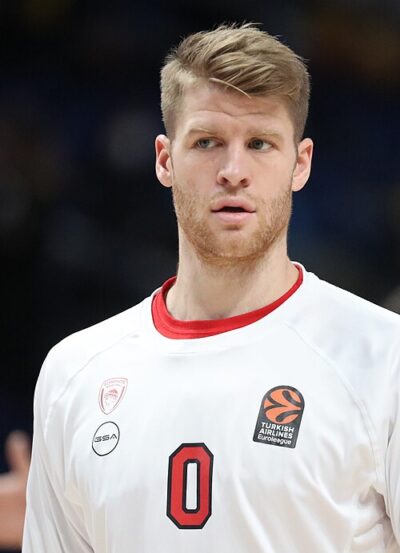
Southland Conference Men's Basketball Player of the Year
Southland Conference Men's Basketball Player of the Year is a class of award. It was created in 1964.
- Country
- United States
- Created
- 1964
All 4 facts, and where they come from
Facts
4 facts · 0 confirmed by two sources · 0 cited · 4 from one source
Where this comes from
Papalocal keeps its own record. It started from these sources; what each one said is kept here as it was copied, so a change on their side never changes this page by itself. Tap one to read its version.
What Wikidata says · copied November 19, 2026 · revision 2517964571
- Described as
- award
- What it is
- class of award
- Created
- 1964
- Country
- United States
- Sport
- basketball
- Wikipedias with a page
- 3
Wikidata item Q944843 (wikidata.org/wiki/Q944843), public domain (CC0). Copied 2026-11-19.
What Wikipedia says · copied November 19, 2026 · revision 1378105123
The Southland Conference Men's Basketball Player of the Year is an award given to the Southland Conference's (SLC) most outstanding player. The award was first given following the conference's inaugural basketball season of 1963–64. Five players have won the award two times: Jerry Rook, Larry Jeffries, Andrew Toney, Ryan Stuart and Thomas Walkup. No player has ever won three times. McNeese has the most all-time winners with ten. Among current SLC members, four have never had a winner: Houston Christian and Incarnate Word, both of which joined in 2013; East Texas A&M, which joined in 2022; and UTRGV, which joined in 2024.
From the Wikipedia article “Southland Conference Men's Basketball Player of the Year” (en.wikipedia.org/wiki/Southland_Conference_Men's_Basketball_Player_of_the_Year), by its contributors, under CC BY-SA 4.0 (creativecommons.org/licenses/by-sa/4.0/). Copied 2026-11-19; not changed.
Confirmed Two sources agree. Cited One source, and it names where it got it. One source One source, without a reference of its own. Sources disagree The sources disagree. We show the best-supported value and keep theirs below.