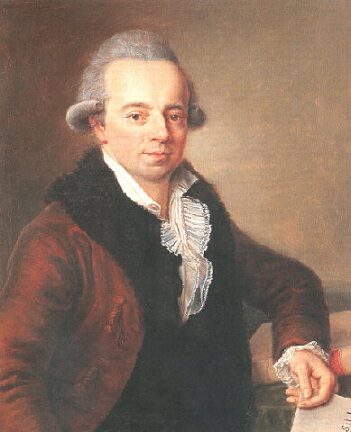
St. Petersburg paradox
St. Petersburg paradox is a paradox involving a game with repeated coin flipping.
All 3 facts, and where they come from
Facts
3 facts · 0 confirmed by two sources · 0 cited · 3 from one source
Where this comes from
Papalocal keeps its own record. It started from these sources; what each one said is kept here as it was copied, so a change on their side never changes this page by itself. Tap one to read its version.
What Wikidata says · copied November 17, 2026 · revision 2532917562
- Described as
- paradox involving a game with repeated coin flipping
- Other names
- Saint Petersburg paradox
- What it is
- paradox; mathematical concept
- Named after
- Saint Petersburg
- Wikipedias with a page
- 27
Wikidata item Q874375 (wikidata.org/wiki/Q874375), public domain (CC0). Copied 2026-11-17.
What Wikipedia says · copied November 17, 2026 · revision 1383365969
The St. Petersburg paradox or St. Petersburg lottery is a paradox involving the game of flipping a coin where the expected payoff of the lottery game is infinite but nevertheless seems to be worth only a very small amount to the participants. The St. Petersburg paradox is a situation where a naïve decision criterion that takes only the expected value into account predicts a course of action that presumably no actual person would be willing to take. Several resolutions to the paradox have been proposed, including the impossible amount of money a casino would need to continue the game indefinitely.
The problem was invented by Nicolas Bernoulli, who stated it in a letter to Pierre Raymond de Montmort on September 9, 1713. However, the paradox takes its name from its analysis by Nicolas' cousin Daniel Bernoulli, one-time resident of Saint Petersburg, who in 1738 published his thoughts about the problem in the Commentaries of the Imperial Academy of Science of Saint Petersburg.
From the Wikipedia article “St. Petersburg paradox” (en.wikipedia.org/wiki/St._Petersburg_paradox), by its contributors, under CC BY-SA 4.0 (creativecommons.org/licenses/by-sa/4.0/). Copied 2026-11-17; not changed.
Confirmed Two sources agree. Cited One source, and it names where it got it. One source One source, without a reference of its own. Sources disagree The sources disagree. We show the best-supported value and keep theirs below.