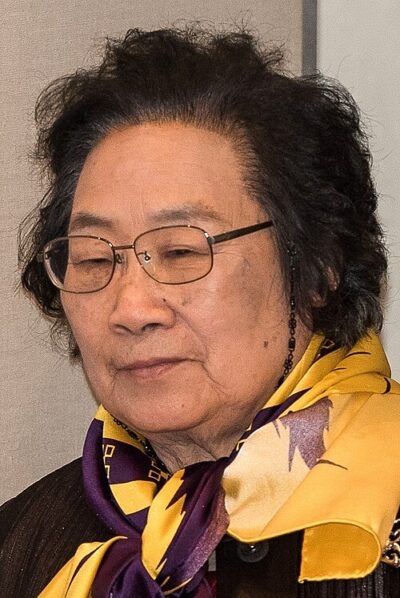
State Preeminent Science and Technology Award
State Preeminent Science and Technology Award is a Chinese award. It was created in 2000. It is given by the Chinese Academy of Sciences.
- Given by
- Chinese Academy of Sciences
- Country
- People's Republic of China
- Created
- 2000
All 4 facts, and where they come from
Facts
4 facts · 0 confirmed by two sources · 0 cited · 4 from one source
Where this comes from
Papalocal keeps its own record. It started from these sources; what each one said is kept here as it was copied, so a change on their side never changes this page by itself. Tap one to read its version.
What Wikidata says · copied November 17, 2026 · revision 2566924997
- Described as
- Chinese award
- Other names
- Highest Science and Technology Award
- What it is
- science and technology award
- Created
- 2000
- Country
- People's Republic of China
- Given by
- Chinese Academy of Sciences
- Wikipedias with a page
- 8
Wikidata item Q841695 (wikidata.org/wiki/Q841695), public domain (CC0). Copied 2026-11-17.
What Wikipedia says · copied November 17, 2026 · revision 1386191281
The Highest Science and Technology Award (Chinese: 国家最高科学技术奖) also known as the State Preeminent Science and Technology Award, State Supreme Science and Technology Award, or China's Nobel Prize is the highest scientific award issued by the President of the PRC to scientists working in China. The award, given annually each January since 2000, is one of the five State Science and Technology Prizes established by the State Council of China.
The award comes with a prize of 8 million RMB (about 1.16 million USD), with 10% of this awarded, as a bonus to the scientist and the remainder awarded to support the scientist's research.
From the Wikipedia article “Highest Science and Technology Award” (en.wikipedia.org/wiki/Highest_Science_and_Technology_Award), by its contributors, under CC BY-SA 4.0 (creativecommons.org/licenses/by-sa/4.0/). Copied 2026-11-17; not changed.
Confirmed Two sources agree. Cited One source, and it names where it got it. One source One source, without a reference of its own. Sources disagree The sources disagree. We show the best-supported value and keep theirs below.