Stefan-Boltzmann law
Stefan-Boltzmann law is a physical law on the emissive power of black body.
All 3 facts, and where they come from
Facts
3 facts · 0 confirmed by two sources · 0 cited · 3 from one source
Where this comes from
Papalocal keeps its own record. It started from these sources; what each one said is kept here as it was copied, so a change on their side never changes this page by itself. Tap one to read its version.
What Wikidata says · copied November 17, 2026 · revision 2545413276
- Described as
- physical law on the emissive power of black body
- Other names
- Stefan's law, Stefan-Boltzmann's law
- What it is
- physical law
- Named after
- Josef Stefan; Ludwig Boltzmann
- Wikipedias with a page
- 57
Wikidata item Q704747 (wikidata.org/wiki/Q704747), public domain (CC0). Copied 2026-11-17.
What Wikipedia says · copied November 17, 2026 · revision 1383957570
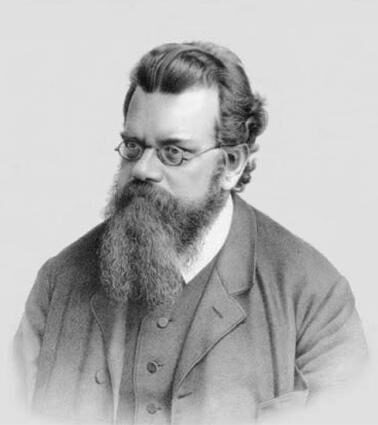
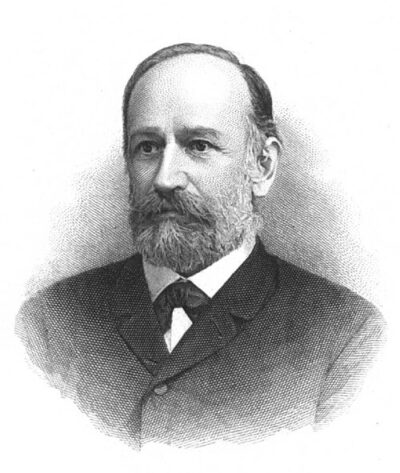
The Stefan–Boltzmann law, also known as Stefan's law, describes the intensity of the thermal radiation emitted by matter in terms of that matter's temperature. It is named for Josef Stefan, who empirically derived the relationship, and Ludwig Boltzmann who derived the law theoretically.
For an ideal absorber/emitter or black body, the Stefan–Boltzmann law states that the total energy radiated per unit surface area per unit time (also known as the radiant exitance) is directly proportional to the fourth power of the black body's temperature, T:
M∘=σT4.
The constant of proportionality, σ, is called the Stefan–Boltzmann constant. It has the valueIn the general case, the Stefan–Boltzmann law for radiant exitance takes the form:
M=εM∘=εσT4,
where ε is the emissivity of the surface emitting the radiation. The emissivity is generally between zero and one. An emissivity of one corresponds to a black body.
From the Wikipedia article “Stefan–Boltzmann law” (en.wikipedia.org/wiki/Stefan–Boltzmann_law), by its contributors, under CC BY-SA 4.0 (creativecommons.org/licenses/by-sa/4.0/). Copied 2026-11-17; not changed.
Confirmed Two sources agree. Cited One source, and it names where it got it. One source One source, without a reference of its own. Sources disagree The sources disagree. We show the best-supported value and keep theirs below.