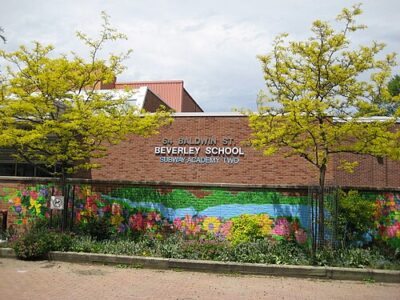
Subway Academy II
Subway Academy II is a high school in Toronto, Ontario, Canada. It was founded in 1976. 65 students study there (2024).
- Located in
- Toronto
- Country
- Canada
- Founded
- 1976
- Students
- 65 (2024)
- What it is
- high school
All 6 facts, and where they come from
Facts
6 facts · 0 confirmed by two sources · 1 cited · 5 from one source
Where this comes from
Papalocal keeps its own record. It started from these sources; what each one said is kept here as it was copied, so a change on their side never changes this page by itself. Tap one to read its version.
What Wikidata says · copied November 17, 2026 · revision 2510412083
- Described as
- high school in Toronto, Ontario, Canada
- Other names
- Subway 2 Academy
- What it is
- high school
- Founded
- 1976
- Located in
- Toronto
- Country
- Canada
- Students
- 65 (2024) · 1 reference
- Official website
- http://schoolweb.tdsb.on.ca/subwayacademy2
- Wikipedias with a page
- 1
Wikidata item Q7632471 (wikidata.org/wiki/Q7632471), public domain (CC0). Copied 2026-11-17.
What Wikipedia says · copied November 17, 2026 · revision 1368161001
Subway Academy II is a public alternative high school in downtown Toronto, Ontario, Canada. It is located on the third floor of Beverley Public School, an elementary school for disabled children. Subway II (as it is referred to by many students) offers an unconventional approach to schooling, with a more flexible schedule, and one-on-one sessions with teachers. The school received its name from Subway Academy I, as it was an offshoot of that school. Despite the name, it is not accessible by the subway, and most students take the 510 Spadina streetcar to get to school. Nearby landmarks include Kensington Market, the University of Toronto, and the Art Gallery of Ontario.
From the Wikipedia article “Subway Academy II” (en.wikipedia.org/wiki/Subway_Academy_II), by its contributors, under CC BY-SA 4.0 (creativecommons.org/licenses/by-sa/4.0/). Copied 2026-11-17; not changed.
Confirmed Two sources agree. Cited One source, and it names where it got it. One source One source, without a reference of its own. Sources disagree The sources disagree. We show the best-supported value and keep theirs below.
Picture: SimonP, via Wikimedia Commons · CC BY-SA 3.0