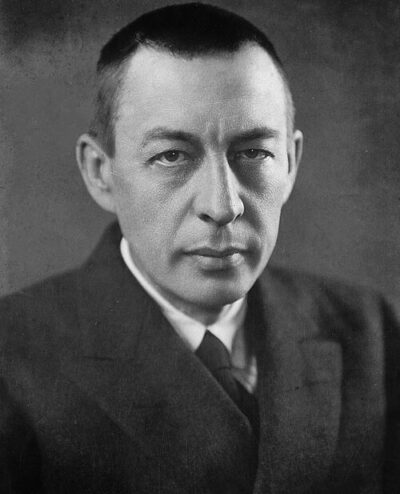
Suite No. 1
Suite No. 1 is a composition for two pianos by Sergei Rachmaninoff. It came out in 1893.
- Released
- 1893
All 3 facts, and where they come from
Facts
3 facts · 0 confirmed by two sources · 0 cited · 3 from one source
Where this comes from
Papalocal keeps its own record. It started from these sources; what each one said is kept here as it was copied, so a change on their side never changes this page by itself. Tap one to read its version.
What Wikidata says · copied November 16, 2026 · revision 2570045890
- Described as
- composition for two pianos by Sergei Rachmaninoff
- Other names
- Suite No. 1 for Two Pianos, Op. 5, Fantaisie-Tableaux, Op. 5
- What it is
- musical work/composition
- Music by
- Sergei Rachmaninoff
- Released
- 1893
- Wikipedias with a page
- 6
Wikidata item Q2311096 (wikidata.org/wiki/Q2311096), public domain (CC0). Copied 2026-11-16.
What Wikipedia says · copied November 16, 2026 · revision 1363339671
Suite No. 1 in G minor (or Fantaisie-tableaux), Op. 5, is a suite for two pianos written by Sergei Rachmaninoff. The suite, a musical depiction of four poems, was written in the summer of 1893 at the Lysikof estate in Lebeden, Kharkov. The premiere took place in Moscow, on November 30, 1893, played by Rachmaninoff himself alongside Pavel Pabst. The work was dedicated to Tchaikovsky, who intended to attend the work's premiere, but died five weeks prior. Its four movements alongside their respective poems are as follows:
Rachmaninoff composed a second suite for two pianos in 1901. The Suite No. 1 was arranged for orchestra by Rebekah Harkness. A 1968 recording by Jorge Mester and the London Philharmonic Orchestra was released in 1994 on Citadel Records.
From the Wikipedia article “Suite No. 1 (Rachmaninoff)” (en.wikipedia.org/wiki/Suite_No._1_(Rachmaninoff)), by its contributors, under CC BY-SA 4.0 (creativecommons.org/licenses/by-sa/4.0/). Copied 2026-11-16; not changed.
Confirmed Two sources agree. Cited One source, and it names where it got it. One source One source, without a reference of its own. Sources disagree The sources disagree. We show the best-supported value and keep theirs below.