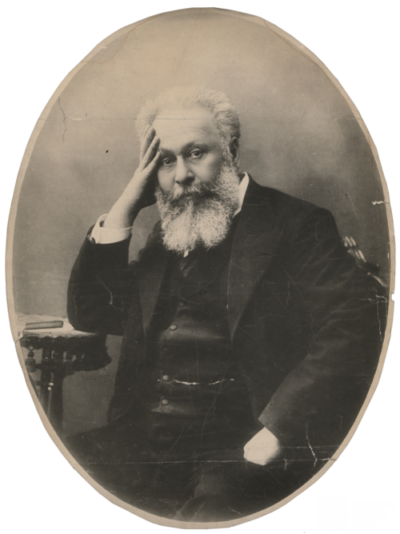
Suliko
Suliko is a Georgian poem and song. It came out in 1895. It is performed by Ivan Rebroff, Alexandrov Ensemble and Sulkhan Tsintsadze.
- Released
- 1895
- Performed by
- Ivan Rebroff
All 7 facts, and where they come from
Facts
7 facts · 0 confirmed by two sources · 0 cited · 7 from one source
Where this comes from
Papalocal keeps its own record. It started from these sources; what each one said is kept here as it was copied, so a change on their side never changes this page by itself. Tap one to read its version.
What Wikidata says · copied November 17, 2026 · revision 2569898332
- Described as
- Georgian poem and song
- What it is
- musical work/composition
- Performed by
- Ivan Rebroff; Alexandrov Ensemble; Sulkhan Tsintsadze · 1 reference
- Released
- 1895
- Original language
- Georgian · 1 reference
- Language
- Georgian
- Wikipedias with a page
- 24
Wikidata item Q2417129 (wikidata.org/wiki/Q2417129), public domain (CC0). Copied 2026-11-17.
What Wikipedia says · copied November 17, 2026 · revision 1371511199
Suliko (Georgian: სულიკო, romanized: sulik'o, pronounced [sulikʼo]) is a Georgian unisex name meaning "soul". It is also the title of a love poem written in 1895 by Akaki Tsereteli, which became widely known throughout the Soviet Union as a song performed with music composed by Akaki's relative Varinka Tsereteli (in 1895), at the former's request. In that form it was often performed on radio during Joseph Stalin's rule, reputedly because it was his favorite. It was translated to and performed in multiple languages including Russian, Ukrainian, Polish, Romanian, English, German, Basque, Chinese, and Hebrew.
Due to Tsereteli’s close affiliation with the Georgian national liberation movement, Suliko is also imbued with his wish of an independent Georgian homeland, a manifest of the existential search of Akaki. As well as this, Suliko has also become a symbol, taking on a variety of interpretations by scholars throughout the decade. According to Akaki Bakradze, the sequential imageries of the rose, the nightingale, and the star trace a vertical ascent in search of God and "The Lost Paradise" that mankind was exiled from. Emzar Kvitaishvili expands on this idea, arguing that the search for Suliko as the embodiment of Supreme Love is associated with the search for God. Besides religious interpretations, Suliko is also a symbol for the ethereal, unattainable dream that occupies the vision of every listener, be it a pursuit for self-reconciliation, or the discovery for one's position in life.
Poet and folklorist Eter Tataraidze tells a story she heard in Tetritskaro Region village Toneti, according to which, Akaki has dedicated this poem to Suliko Samadashvili from Toneti; Akaki was friend with Samadashvili’s brother and was shocked by his tragic death; Suliko, who went to the town to buy clothes for the wedding was killed by wild animal in the forest and the bones were found only after several months of searching. According to the story, when Akaki came to the grave, he found Suliko’s beloved crying tears over the grave in despair. That is why, the initial line – „ჩემი ძმის საფლავს ვეძებდი, ვერ ვნახე, დაკარგულიყო“, {“I was searching for my brother’s grave, but could not find it, it has been lost”}, he changed to – „საყვარლის საფლავს ვეძებდი, ვერ ვნახე, დაკარგულიყო“, {“I was searching for my beloved’s grave, but could not find it, it has been lost”...} Obviously, a folk saying is far from true historic fact, though it reveals the far-reaching cultural influence this piece has in the folklore and beliefs of Georgians.
From the Wikipedia article “Suliko” (en.wikipedia.org/wiki/Suliko), by its contributors, under CC BY-SA 4.0 (creativecommons.org/licenses/by-sa/4.0/). Copied 2026-11-17; not changed.
Confirmed Two sources agree. Cited One source, and it names where it got it. One source One source, without a reference of its own. Sources disagree The sources disagree. We show the best-supported value and keep theirs below.