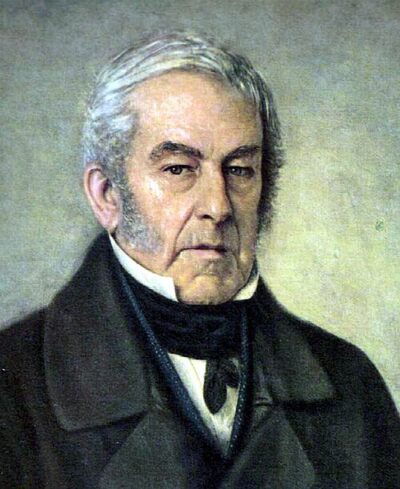
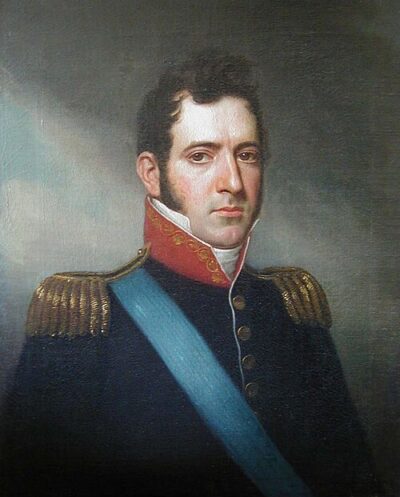
Supreme Director of the United Provinces of the Río de la Plata
Supreme Director of the United Provinces of the Río de la Plata is an early 19th century government of Argentina.
- Office of
- United Provinces of the Río de la Plata
All 4 facts, and where they come from
Facts
4 facts · 0 confirmed by two sources · 0 cited · 4 from one source
Where this comes from
Papalocal keeps its own record. It started from these sources; what each one said is kept here as it was copied, so a change on their side never changes this page by itself. Tap one to read its version.
What Wikidata says · copied November 18, 2026 · revision 2569818822
- Described as
- early 19th century government of Argentina
- Other names
- Supreme Director of the United Provinces of the Rio de la Plata
- What it is
- position; executive branch; government
- Office of
- United Provinces of the Río de la Plata
- Wikipedias with a page
- 10
Wikidata item Q2481051 (wikidata.org/wiki/Q2481051), public domain (CC0). Copied 2026-11-18.
What Wikipedia says · copied November 18, 2026 · revision 1361963501
The Supreme Director of the United Provinces of the Río de la Plata (Spanish: Director Supremo de las Provincias Unidas del Río de la Plata) was a title given to the executive officers of the United Provinces of the Río de la Plata according to the form of government established in 1814 by the Asamblea del Año XIII (Assembly of Year XIII). The supreme director was to wield power for a term of two years.
The assembly hoped to confront the royalists, who had been emboldened by internal dissension within the patriotic faction. To prevent abuses of power, the directorship would be combined with a state council of nine members and would be required to answer to a congress empowered to carry out legislation.
After the resignation of José Rondeau following the unitarian defeat at the Battle of Cepeda, the office of Supreme Director was briefly assumed by Juan Pedro Aguirre. He endorsed the Buenos Aires Cabildo to name a governor for the province of Buenos Aires as the national congress dissolved itself on 16 February 1820, effectively ending the centralism in the national government and giving way to a new federal reorganization for the country, which was immediately formalized by the Treaty of Pilar on 23 February 1820.
For the traditional liberal historiography, exemplified by Bartolomé Mitre's works, the aftermath of the dissolution of the centralist government led to the Anarquía del año 20 (Anarchy of the 1820s). Until 1826 there would not be any central authority among the provinces of Argentina.
From the Wikipedia article “Supreme Director of the United Provinces of the Río de la Plata” (en.wikipedia.org/wiki/Supreme_Director_of_the_United_Provinces_of_the_Río_de_la_Plata), by its contributors, under CC BY-SA 4.0 (creativecommons.org/licenses/by-sa/4.0/). Copied 2026-11-18; not changed.
Confirmed Two sources agree. Cited One source, and it names where it got it. One source One source, without a reference of its own. Sources disagree The sources disagree. We show the best-supported value and keep theirs below.