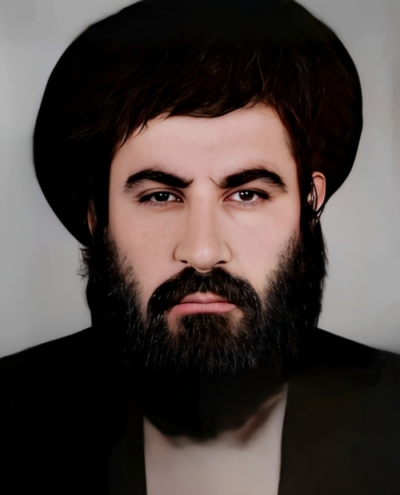
Supreme Leader of Afghanistan
Supreme Leader of Afghanistan is a head of state and ruler of Afghanistan. It was created in 1996.
- Office of
- Afghanistan
- Country
- Afghanistan
- Created
- April 4, 1996
All 5 facts, and where they come from
Facts
5 facts · 0 confirmed by two sources · 0 cited · 5 from one source
Where this comes from
Papalocal keeps its own record. It started from these sources; what each one said is kept here as it was copied, so a change on their side never changes this page by itself. Tap one to read its version.
What Wikidata says · copied November 16, 2026 · revision 2558576245
- Described as
- head of state and ruler of Afghanistan
- Other names
- Amir al-Mu'minin of Afghanistan
- What it is
- position
- Created
- April 4, 1996
- Country
- Afghanistan; Islamic Emirate of Afghanistan
- Office of
- Afghanistan
- Wikipedias with a page
- 24
Wikidata item Q108130107 (wikidata.org/wiki/Q108130107), public domain (CC0). Copied 2026-11-16.
What Wikipedia says · copied November 16, 2026 · revision 1384182461
The supreme leader of Afghanistan (Pashto: د افغانستان مشر, romanised: Də Afġānistān Məshar, Dari: رهبر افغانستان, romanised: Rahbar-i Afghānistān), officially the supreme leader of the Islamic Emirate of Afghanistan and also referred to by his religious title Amir al-Mu'minin (Arabic, lit. 'Commander of the Faithful'), is the absolute ruler, head of state, and national religious leader of Afghanistan, as well as the leader of the Taliban. The supreme leader wields unlimited authority and is the ultimate source of all law.
The first supreme leader, Mullah Omar, ruled Afghanistan from 1996 to 2001 before his government was overthrown by the United States and he was forced into exile. The current supreme leader is Hibatullah Akhundzada, who assumed office in exile during the Taliban insurgency on 25 May 2016, upon being chosen by the Leadership Council, and came to power on 15 August 2021 with the Taliban's victory over Afghan government forces in 2021. Since coming to power, Akhundzada has issued numerous decrees that have profoundly reshaped government and daily life in Afghanistan by implementing his strict interpretation of the Hanafi school of Sharia law.
The supreme leader appoints and manages the activities of the prime minister and other members of the Cabinet, as well as judges and provincial and local leaders.
From the Wikipedia article “Supreme Leader of Afghanistan” (en.wikipedia.org/wiki/Supreme_Leader_of_Afghanistan), by its contributors, under CC BY-SA 4.0 (creativecommons.org/licenses/by-sa/4.0/). Copied 2026-11-16; not changed.
Confirmed Two sources agree. Cited One source, and it names where it got it. One source One source, without a reference of its own. Sources disagree The sources disagree. We show the best-supported value and keep theirs below.