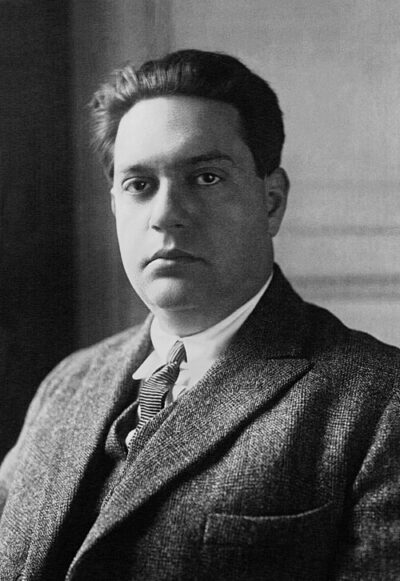
Symphony No. 1
Symphony No. 1 is a symphony by Darius Milhaud.
All 2 facts, and where they come from
Facts
2 facts · 0 confirmed by two sources · 0 cited · 2 from one source
Where this comes from
Papalocal keeps its own record. It started from these sources; what each one said is kept here as it was copied, so a change on their side never changes this page by itself. Tap one to read its version.
What Wikidata says · copied November 17, 2026 · revision 2569895878
- Described as
- symphony by Darius Milhaud
- What it is
- musical work/composition
- Music by
- Darius Milhaud
- Wikipedias with a page
- 5
Wikidata item Q3507658 (wikidata.org/wiki/Q3507658), public domain (CC0). Copied 2026-11-17.
What Wikipedia says · copied November 17, 2026 · revision 1343142943
The Symphony No. 1, Op. 210, by Darius Milhaud is a work for orchestra composed in France in 1939, during a period of illness and anxiety following the outbreak of World War II. Nearly fifty years old at the time and already a very prolific and mature composer, Milhaud had never attempted a symphony before. In spite of his expressed antipathy toward the "German music" typified by the symphony, he accepted a commission for this work from the Chicago Symphony Orchestra, then approaching its 50th anniversary. Milhaud went on to write twelve more numbered symphonies by 1963.
In spite of the trying circumstances in which it was written, Milhaud's First Symphony is a bright, optimistic work in its composer's unique neo-classical style. With a total running time of some 24 minutes, the piece's four movements are:This symphony, which is not to be confused with Milhaud's Little Symphony No.1 "Le printemps", Op.43 (1917), is published by Heugel & Cie.
From the Wikipedia article “Symphony No. 1 (Milhaud)” (en.wikipedia.org/wiki/Symphony_No._1_(Milhaud)), by its contributors, under CC BY-SA 4.0 (creativecommons.org/licenses/by-sa/4.0/). Copied 2026-11-17; not changed.
Confirmed Two sources agree. Cited One source, and it names where it got it. One source One source, without a reference of its own. Sources disagree The sources disagree. We show the best-supported value and keep theirs below.