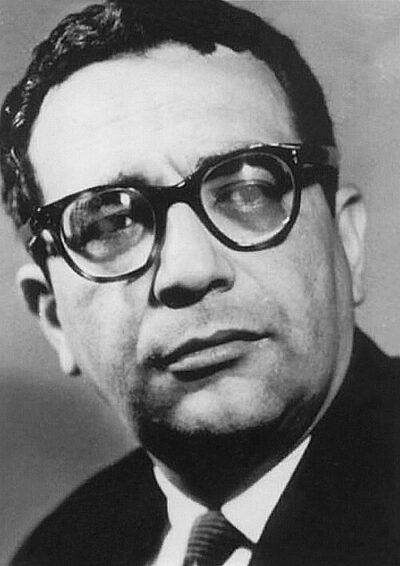
Symphony No. 3
Symphony No. 3 is a symphony in four movements composed by Gara Garayev. It came out in 1964.
- Released
- 1964
All 4 facts, and where they come from
Facts
4 facts · 0 confirmed by two sources · 0 cited · 4 from one source
Where this comes from
Papalocal keeps its own record. It started from these sources; what each one said is kept here as it was copied, so a change on their side never changes this page by itself. Tap one to read its version.
What Wikidata says · copied November 17, 2026 · revision 2569774229
- Described as
- symphony in four movements composed by Gara Garayev
- What it is
- musical work/composition
- Music by
- Gara Garayev
- Released
- 1964
- Language
- no linguistic content
- Wikipedias with a page
- 3
Wikidata item Q2419789 (wikidata.org/wiki/Q2419789), public domain (CC0). Copied 2026-11-17.
What Wikipedia says · copied November 17, 2026 · revision 1373053128
Gara Garayev's Symphony No. 3 was composed in 1964. It was the last of the composer's three numbered symphonies and it marks a development from his two previous contributions to the genre, composed in the mid-1940s during his studies in the Leningrad Conservatory under Dmitri Shostakovich. It was one of the first serial symphonies composed in the Soviet Union, fusing the twelve-tone technique with Azerbaijani folk music influences in the ashug tradition in the frame of a classical structure, attempting to find to new ways of artistic expression, new principles of form and construction, and, most notably, new means of expressive musical language and wanting to prove that strictly following the twelve-tone technique it is possible to write nationalistic music, and not simply nationalistic, but specifically ashug according to the composer.
The symphony is scored for a chamber orchestra and it lasts c. 25 minutes, consisting of four movements:
From the Wikipedia article “Symphony No. 3 (Garayev)” (en.wikipedia.org/wiki/Symphony_No._3_(Garayev)), by its contributors, under CC BY-SA 4.0 (creativecommons.org/licenses/by-sa/4.0/). Copied 2026-11-17; not changed.
Confirmed Two sources agree. Cited One source, and it names where it got it. One source One source, without a reference of its own. Sources disagree The sources disagree. We show the best-supported value and keep theirs below.