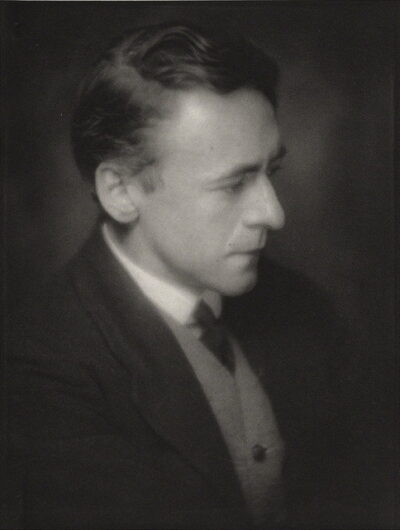
Symphony No. 3
Symphony No. 3 is a symphony by Arnold Bax.
All 2 facts, and where they come from
Facts
2 facts · 0 confirmed by two sources · 0 cited · 2 from one source
Where this comes from
Papalocal keeps its own record. It started from these sources; what each one said is kept here as it was copied, so a change on their side never changes this page by itself. Tap one to read its version.
What Wikidata says · copied November 17, 2026 · revision 2570501936
- Described as
- symphony by Arnold Bax
- What it is
- musical work/composition
- Music by
- Arnold Bax
- Wikipedias with a page
- 6
Wikidata item Q3798126 (wikidata.org/wiki/Q3798126), public domain (CC0). Copied 2026-11-17.
What Wikipedia says · copied November 17, 2026 · revision 1374450584
The Symphony No. 3 by Arnold Bax was completed in 1929. It was dedicated to Sir Henry Wood and is perhaps the most performed and most immediately approachable of Bax's symphonies. Unlike his first two symphonies, the third is "gentle rather than somber in character, dominated by the spirit of Northern legends which, Bax acknowledges, influenced him subconsciously".
It was the first symphony Bax completed at the Station Hotel, Morar, in the West Highlands of Scotland. A New York premiere was given by Sir Thomas Beecham in 1936. The first recording was by the Hallé Orchestra under John Barbirolli in 1944.
In addition to the Barbirolli recording, the symphony has been recorded by the London Symphony Orchestra under Sir Edward Downes (RCA), the London Philharmonic Orchestra under Bryden Thomson (Chandos), the BBC Philharmonic with Vernon Handley (Chandos) and the Royal Scottish National Orchestra conducted by David Lloyd-Jones (Naxos). The original Barbirolli recording has been reissued several times by EMI Classics, and latterly by Dutton Vocalion.
From the Wikipedia article “Symphony No. 3 (Bax)” (en.wikipedia.org/wiki/Symphony_No._3_(Bax)), by its contributors, under CC BY-SA 4.0 (creativecommons.org/licenses/by-sa/4.0/). Copied 2026-11-17; not changed.
Confirmed Two sources agree. Cited One source, and it names where it got it. One source One source, without a reference of its own. Sources disagree The sources disagree. We show the best-supported value and keep theirs below.