

Taliban
The Taliban is an Afghan islamist organization. It was founded in 1994 by Mohammed Omar and Abdul Ghani Baradar. Its headquarters are in Afghanistan. It stands for Islamism, Pashtunwali and Deobandi.
- Country
- Afghanistan
- Founded
- 1994
- Ideology
- Islamism
All 17 facts, and where they come from
Facts
17 facts · 0 confirmed by two sources · 1 cited · 16 from one source
Where this comes from
Papalocal keeps its own record. It started from these sources; what each one said is kept here as it was copied, so a change on their side never changes this page by itself. Tap one to read its version.
What Wikidata says · copied November 16, 2026 · revision 2568851301
- Described as
- Afghan islamist organization
- Other names
- Taleban, Islamic Emirate of Afghanistan, Afghan Taliban
- What it is
- terrorist organization; political movement; military organization
- Country of origin
- Afghanistan
- Founded
- 1994
- Founded by
- Mohammed Omar · 1 reference; Abdul Ghani Baradar · 1 reference
- Headquarters
- Afghanistan · 1 reference
- Country
- Afghanistan · 1 reference
- Industry
- religious congregations and associations
- Chair
- Mohammed Omar (1994–2013) · 1 reference; Akhtar Mansour (2015–2016) · 1 reference
- Ideology
- Islamism · 1 reference; Pashtunwali · 1 reference; Deobandi · 1 reference; religious nationalism
- Official website
- https://alemarahenglish.af/
- Wikipedias with a page
- 145
Wikidata item Q42418 (wikidata.org/wiki/Q42418), public domain (CC0). Copied 2026-11-16.
What Wikipedia says · copied November 16, 2026 · revision 1384499562
The Taliban is a Sunni Islamist political and militant organization which has governed Afghanistan since 2021. Having previously ruled the country from 1996 to 2001, the group was overthrown following the United States invasion of Afghanistan and fought a twenty-year war which ended in their return to power.
Emerging in 1994 as a faction in the Afghan Civil War (1992–1996), the Taliban largely consisted of warlords from the Pashtun areas of eastern and southern Afghanistan. Under the leadership of Mullah Omar, it took control of most of the country and, after seizing the capital Kabul in 1996, established a government which enforced a strict interpretation of Sharia. They were internationally condemned and isolated for their human rights practices. The Northern Alliance continued a civil war against the group and maintained international recognition as a continuation of the previous government.
After the September 11 attacks in 2001, the United States demanded the Taliban surrender al-Qaeda leader Osama bin Laden, who was residing in the country. Upon refusing to do so, Afghanistan was invaded by a US-led coalition and the Taliban government was overthrown, most of the group fleeing to neighboring Pakistan. Following the invasion, the Taliban regrouped and mounted an insurgency against the US-backed Islamic Republic of Afghanistan and coalition forces. After signing a peace deal with the US, the Taliban conducted a nationwide offensive in 2021 culminating in the fall of Kabul, the collapse of the Islamic Republic, and the reinstatement of the Islamic Emirate of Afghanistan.
The ideology of the Taliban is dominated by the Deobandi movement of Hanafi Islamic fundamentalism, along with elements of Pashtun nationalism. It is de facto the sole legal political force in the country, rejecting the principles of democracy and political parties. The group operates centrally under a supreme leader (Hibatullah Akhundzada since 2016) who wields unlimited power and issues fatwas serving both as law and religious instruction. The Taliban has been condemned for civilian massacres, human rights abuses and restrictions, particularly of women's rights, and persecuting ethnic and religious minorities. Unlike al-Qaeda and the Islamic State, it does not hold transnational aims—it remains discreetly allied with the former and is openly hostile to the latter. It is designated as a terrorist organization by several countries, and its government is largely unrecognized by the international community, with only Russia having granted it diplomatic recognition as of 2026.
From the Wikipedia article “Taliban” (en.wikipedia.org/wiki/Taliban), by its contributors, under CC BY-SA 4.0 (creativecommons.org/licenses/by-sa/4.0/). Copied 2026-11-16; not changed.
Confirmed Two sources agree. Cited One source, and it names where it got it. One source One source, without a reference of its own. Sources disagree The sources disagree. We show the best-supported value and keep theirs below.
Picture: Wikimedia Commons: Taliban insurgents turn themselves in to Afghan National Security Forces at a forward operating base in Puza-i-Eshan -a.jpg · See Commons file page
People connected 3
Party members
- HHibatullah AkhundzadaSupreme Leader of Afghanistan since 2021
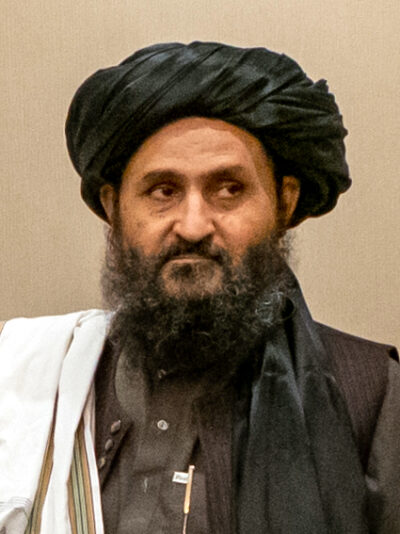 Abdul Ghani Baradarco-founder and political leader of the Afghan Taliban
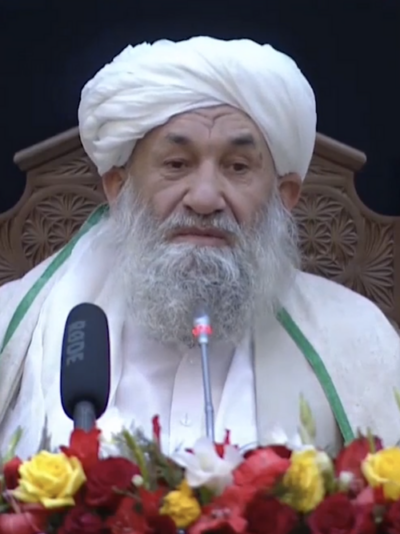 Mohammad Hasan AkhundPrime Minister of Islamic Emirate of Afghanistan
