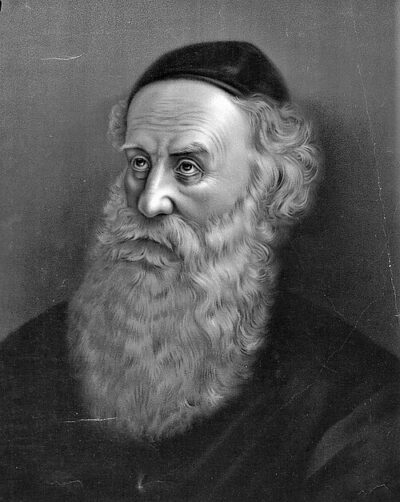
Tanya
Tanya is a main work of the Chabad philosophy. It came out in 1796. It was written by Shneur Zalman of Liadi.
- Published
- 1796
- Written by
- Shneur Zalman of Liadi
- Genre
- rabbinic literature
- Country of origin
- Ukraine
All 10 facts, and where they come from
Facts
10 facts · 0 confirmed by two sources · 0 cited · 10 from one source
Where this comes from
Papalocal keeps its own record. It started from these sources; what each one said is kept here as it was copied, so a change on their side never changes this page by itself. Tap one to read its version.
What Wikidata says · copied November 18, 2026 · revision 2484416089
- Described as
- main work of the Chabad philosophy
- What it is
- written work
- Written by
- Shneur Zalman of Liadi
- Publisher
- Kehot Publication Society
- Genre
- rabbinic literature; Hasidic literature
- Published
- 1796
- Language
- Hebrew
- Country of origin
- Ukraine; Russia
- Followed by
- Shulchan Aruch HaRav · 1 reference
- Wikipedias with a page
- 17
Wikidata item Q2572924 (wikidata.org/wiki/Q2572924), public domain (CC0). Copied 2026-11-18.
What Wikipedia says · copied November 18, 2026 · revision 1373678204
The Tanya (Hebrew: תניא) is an early work of Hasidic philosophy by Shneur Zalman of Liadi, the first Rebbe of Chabad, first published in 1796. Although the first edition was titled Likkutei Amarim (Hebrew: ליקוטי אמרים, "collected sayings"), this was downgraded to a subtitle by the second edition of 1798 and replaced by its incipit "tanya" (Aramaic: תניא, "It was taught: they adjure him to be righteous and not evil . . ."). The Tanya is composed of five sections that define Hasidic mystical psychology and theology as a handbook for daily spiritual life in Jewish observance.
The Tanya is the main work of Chabad philosophy and the Chabad approach to Hasidic mysticism, as it defines its general interpretation and method. The subsequent extensive library of the Chabad school, authored by successive leaders, builds upon the approach of the Tanya. Chabad differed from mainstream Hasidism by its philosophical investigation and intellectual analysis of Hasidic Torah exegesis. This emphasised the mind as the route to internalising Hasidic mystical dveikus (emotional fervour), in contrast to general Hasidism's creative enthusiasm in faith. Consequently, Chabad Hasidic writings are typically characterised by their systematic intellectual structure, while other classic texts of general Hasidic mysticism are usually more compiled or anecdotal.
As one of the founding figures of Hasidic mysticism, Schneur Zalman and his approach in the Tanya are revered by some other Hasidic schools, although they tend to avoid its meditative methods. In Chabad, it is called "the Written Torah of Hasidus", with the subsequent Chabad corpus being the analogical Oral Torah. In it, Zalman brings the new interpretations of Jewish mysticism by the Baal Shem Tov, founder of Hasidism, into philosophical articulation and definition. This intellectual form synthesises Hasidic concepts of divine omnipresence and Jewish soulfulness with other historical components of Rabbinic literature, embodied in the Talmud, Jewish philosophy, Musar (ethical) literature and Lurianic Kabbalah. The Tanya has therefore been seen in Chabad as the defining Hasidic text and a subsequent stage of Jewish mystical evolution.
From the Wikipedia article “Tanya (Judaism)” (en.wikipedia.org/wiki/Tanya_(Judaism)), by its contributors, under CC BY-SA 4.0 (creativecommons.org/licenses/by-sa/4.0/). Copied 2026-11-18; not changed.
Confirmed Two sources agree. Cited One source, and it names where it got it. One source One source, without a reference of its own. Sources disagree The sources disagree. We show the best-supported value and keep theirs below.
Picture: Wikimedia Commons: Faid1.jpg · See Commons file page