Taylor's theorem
Taylor's theorem is an approximation of a function by a truncated power series.
All 2 facts, and where they come from
Facts
2 facts · 0 confirmed by two sources · 0 cited · 2 from one source
Where this comes from
Papalocal keeps its own record. It started from these sources; what each one said is kept here as it was copied, so a change on their side never changes this page by itself. Tap one to read its version.
What Wikidata says · copied November 17, 2026 · revision 2541642703
- Described as
- approximation of a function by a truncated power series
- What it is
- theorem
- Named after
- Brook Taylor
- Wikipedias with a page
- 34
Wikidata item Q1137206 (wikidata.org/wiki/Q1137206), public domain (CC0). Copied 2026-11-17.
What Wikipedia says · copied November 17, 2026 · revision 1383766720
In calculus, Taylor's theorem gives an approximation of a k-times differentiable function around a given point by a polynomial of degree k, called the k-th-order Taylor polynomial. For a smooth function, the Taylor polynomial is the truncation at the order k of the Taylor series of the function. The first-order Taylor polynomial is the linear approximation of the function, and the second-order Taylor polynomial is often referred to as the quadratic approximation. There are several versions of Taylor's theorem, some giving explicit estimates of the approximation error of the function by its Taylor polynomial.
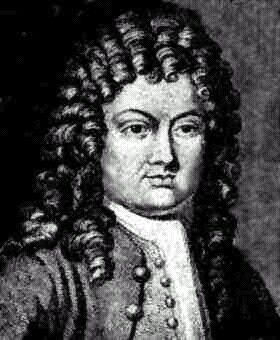
Taylor's theorem is named after Brook Taylor, who stated a version of it in 1715, although an earlier version of the result was already mentioned in 1671 by James Gregory.
Taylor's theorem is taught in introductory-level calculus courses and is one of the central elementary tools in mathematical analysis. It gives simple arithmetic formulas to accurately compute values of many transcendental functions such as the exponential function and trigonometric functions.
It is the starting point of the study of analytic functions, and is fundamental in various areas of mathematics, as well as in numerical analysis and mathematical physics. Taylor's theorem also generalizes to multivariate and vector valued functions. It provided the mathematical basis for some landmark early computing machines: Charles Babbage's difference engine calculated sines, cosines, logarithms, and other transcendental functions by numerically integrating the first 7 terms of their Taylor series.
From the Wikipedia article “Taylor's theorem” (en.wikipedia.org/wiki/Taylor's_theorem), by its contributors, under CC BY-SA 4.0 (creativecommons.org/licenses/by-sa/4.0/). Copied 2026-11-17; not changed.
Confirmed Two sources agree. Cited One source, and it names where it got it. One source One source, without a reference of its own. Sources disagree The sources disagree. We show the best-supported value and keep theirs below.