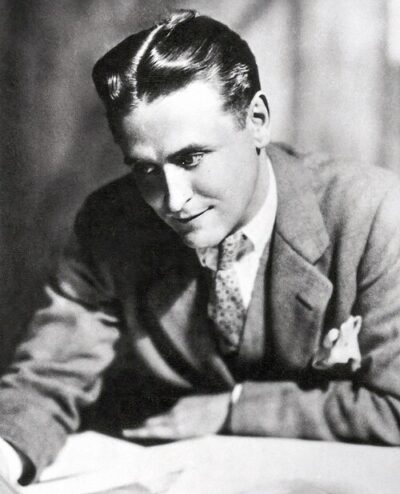
Tender Is the Night
Tender Is the Night is a 1934 novel by F. Scott Fitzgerald.
- Published
- 1934
- Written by
- F. Scott Fitzgerald
- Genre
- autobiographical novel
- Country of origin
- United States
All 9 facts, and where they come from
Facts
9 facts · 0 confirmed by two sources · 0 cited · 9 from one source
Where this comes from
Papalocal keeps its own record. It started from these sources; what each one said is kept here as it was copied, so a change on their side never changes this page by itself. Tap one to read its version.
What Wikidata says · copied November 16, 2026 · revision 2553377843
- Described as
- 1934 novel by F. Scott Fitzgerald
- What it is
- literary work
- Written by
- F. Scott Fitzgerald
- Publisher
- Charles Scribner's Sons
- Genre
- autobiographical novel
- Published
- 1934
- Language
- English
- Country of origin
- United States
- Comes after
- The Great Gatsby
- Followed by
- The Love of the Last Tycoon · 1 reference
- Wikipedias with a page
- 34
Wikidata item Q247372 (wikidata.org/wiki/Q247372), public domain (CC0). Copied 2026-11-16.
What Wikipedia says · copied November 16, 2026 · revision 1384232671
Tender Is the Night is the fourth and final novel completed by American writer F. Scott Fitzgerald. Set in the French Riviera during the twilight of the Jazz Age, the 1934 novel chronicles the rise and fall of Dick Diver, a promising young psychiatrist, and his wife, Nicole, who is one of his patients. The story mirrors events in the lives of the author and his wife Zelda Fitzgerald as Dick starts his descent into alcoholism and Nicole struggles with mental illness.
Fitzgerald began the novel in 1925 after the publication of his third novel The Great Gatsby. During the protracted writing process, the mental health of his wife rapidly deteriorated, and she required extended hospitalization due to her suicidal and homicidal tendencies. After her hospitalization in Baltimore, Maryland, the author rented the La Paix estate in the suburb of Towson to be close to his wife, and he continued his work on the manuscript.
While working on the book, Fitzgerald was beset with financial difficulties and drank heavily. He kept afloat by borrowing money from both his editor Max Perkins and his agent Harold Ober, as well as writing short stories for commercial magazines. Fitzgerald completed the work in fall 1933, and Scribner's Magazine serialized the novel in four installments between January and April 1934 before its publication on April 12, 1934. Although artist Edward Shenton illustrated the serialization, he did not design the book's jacket. The jacket was by an unknown artist, and Fitzgerald disliked it.
The title is taken from the poem "Ode to a Nightingale" by John Keats.
Two versions of the novel are in print. The first version, published in 1934, uses analepsis; the second, revised version, prepared by Fitzgerald's friend and critic Malcolm Cowley on the basis of notes for a revision left by Fitzgerald, is ordered chronologically and was first published posthumously in 1948. Critics suggested that Cowley's revision was undertaken due to negative reviews of the temporal structure of the first version of the book.
Fitzgerald considered the novel to be his masterwork. Although it received a tepid response upon release, it has grown in acclaim over the years and is now regarded as among Fitzgerald's best works. In 1998, the Modern Library ranked the novel 28th on its list of the 100 best English-language novels of the 20th century.
From the Wikipedia article “Tender Is the Night” (en.wikipedia.org/wiki/Tender_Is_the_Night), by its contributors, under CC BY-SA 4.0 (creativecommons.org/licenses/by-sa/4.0/). Copied 2026-11-16; not changed.
Confirmed Two sources agree. Cited One source, and it names where it got it. One source One source, without a reference of its own. Sources disagree The sources disagree. We show the best-supported value and keep theirs below.
Picture: Wikimedia Commons: Tender Is the Night (1934 1st ed dust jacket).jpg · See Commons file page