The 120 Days of Sodom
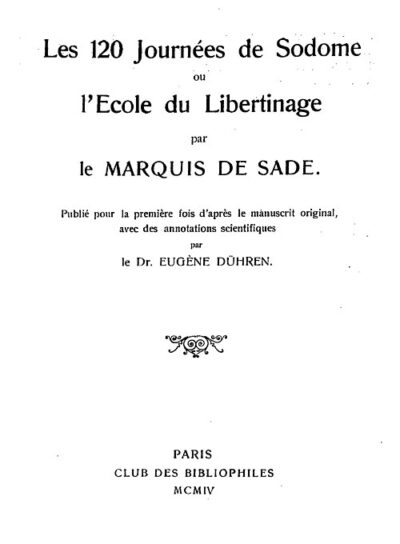
The 120 Days of Sodom is a 1785 novel by Marquis de Sade. It came out in 1904.
- Published
- 1904
- Came out
- 1785
- Written by
- Marquis de Sade
- Genre
- erotica
- Country of origin
- France
All 9 facts, and where they come from
Facts
9 facts · 0 confirmed by two sources · 3 cited · 6 from one source
Where this comes from
Papalocal keeps its own record. It started from these sources; what each one said is kept here as it was copied, so a change on their side never changes this page by itself. Tap one to read its version.
What Wikidata says · copied November 17, 2026 · revision 2556308040
- Described as
- 1785 novel by Marquis de Sade
- What it is
- literary work; unfinished novel
- Written by
- Marquis de Sade · 1 reference
- Genre
- erotica; fiction · 1 reference
- Published
- 1904
- Language
- French · 1 reference
- Country of origin
- France
- Came out
- 1785
- Wikipedias with a page
- 32
Wikidata item Q1210734 (wikidata.org/wiki/Q1210734), public domain (CC0). Copied 2026-11-17.
What Wikipedia says · copied November 17, 2026 · revision 1386021122
The 120 Days of Sodom, or the School of Libertinage (French: Les 120 Journées de Sodome ou l'école du libertinage) is an unfinished novel by the French writer and nobleman Donatien Alphonse François, Marquis de Sade, written in 1785 and published in 1904 after its manuscript was rediscovered. It describes the activities of four wealthy libertine Frenchmen who spend four months seeking the ultimate sexual gratification through orgies, sealing themselves in an inaccessible castle in the heart of the Black Forest with 12 accomplices, 20 designated victims and 10 servants. Four aging prostitutes relate stories of their most memorable clients whose sexual practices involved 600 "passions" including coprophilia, necrophilia, bestiality, incest, rape, and child sexual abuse. The stories inspire the libertines to engage in acts of increasing violence leading to the torture and murder of their victims, most of whom are adolescents and young women.
The novel survives only in draft form. Its introduction and first part were written according to Sade's detailed plan, but the subsequent three parts are mostly in the form of notes. Sade wrote it in secrecy while imprisoned in the Bastille. When the fortress was stormed by revolutionaries on 14 July 1789, Sade believed the manuscript had been lost. However, it had been found and preserved without his knowledge and was eventually published in a restricted edition in 1904 for its scientific interest to sexologists. The novel was banned as pornographic in France and English-speaking countries before becoming more widely available in commercial editions in the 1960s. It was published in the prestigious French Pléiade edition in 1990 and a new English translation was published as a Penguin Classic in 2016.
The novel attracted increasing critical interest after World War II. In 1957, Georges Bataille said it "towers above all other books in that it represents man's fundamental desire for freedom that he is obliged to contain and keep quiet". Critical opinion, however, remains divided. Neil Schaeffer calls it "one of the most radical, one of the most important novels ever written", whereas for Laurence Louis Bongie it is "an unending mire of permuted depravities".
From the Wikipedia article “The 120 Days of Sodom” (en.wikipedia.org/wiki/The_120_Days_of_Sodom), by its contributors, under CC BY-SA 4.0 (creativecommons.org/licenses/by-sa/4.0/). Copied 2026-11-17; not changed.
Confirmed Two sources agree. Cited One source, and it names where it got it. One source One source, without a reference of its own. Sources disagree The sources disagree. We show the best-supported value and keep theirs below.
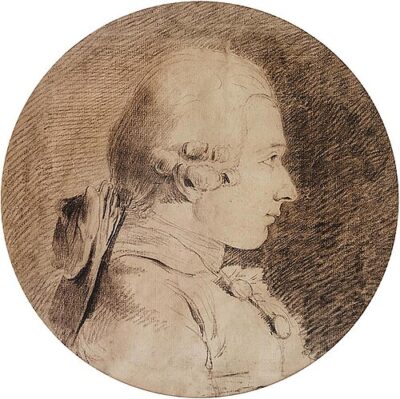
Picture: Marquis de Sade, via Wikimedia Commons · Public domain