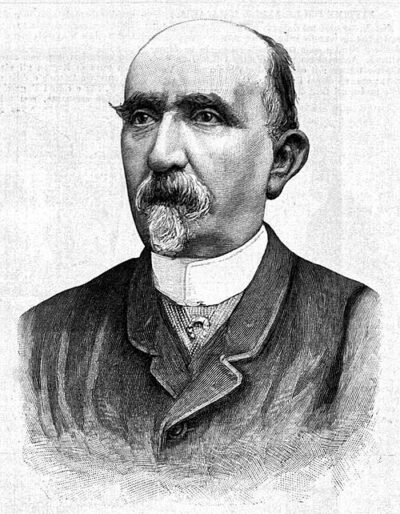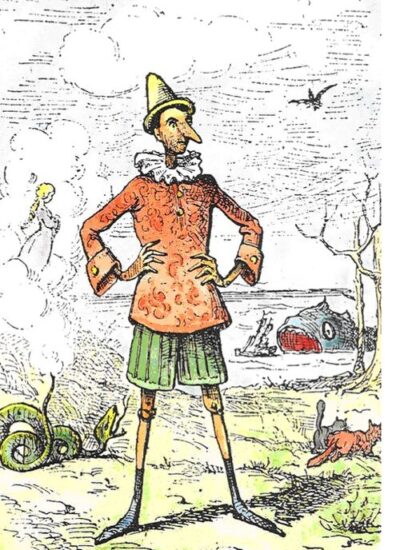
The Adventures of Pinocchio
The Adventures of Pinocchio is a 1883 novel by Carlo Collodi.
- Published
- 1883
- Came out
- July 7, 1881
- Written by
- Carlo Collodi
- Genre
- literary fairy tale
- Country of origin
- Italy
All 10 facts, and where they come from
Facts
10 facts · 0 confirmed by two sources · 3 cited · 7 from one source
Where this comes from
Papalocal keeps its own record. It started from these sources; what each one said is kept here as it was copied, so a change on their side never changes this page by itself. Tap one to read its version.
What Wikidata says · copied November 17, 2026 · revision 2547712715
- Described as
- 1883 novel by Carlo Collodi
- Other names
- Pinocchio, Le avventure di Pinocchio. Storia di un burattino, The Story of a Puppet
- What it is
- literary work · 2 references
- Written by
- Carlo Collodi · 1 reference
- Genre
- literary fairy tale; children's story; children's fiction; adventure fiction
- Published
- 1883 · 1 reference
- Language
- Italian
- Country of origin
- Italy
- Came out
- July 7, 1881
- Wikipedias with a page
- 84
Wikidata item Q8065468 (wikidata.org/wiki/Q8065468), public domain (CC0). Copied 2026-11-17.
What Wikipedia says · copied November 17, 2026 · revision 1385646155
The Adventures of Pinocchio, commonly shortened to Pinocchio, is an 1883 children's fantasy novel by Italian author Carlo Collodi. It is about the mischievous adventures of an animated marionette named Pinocchio. He faces many perils and temptations, meets characters who teach him about life, and learns goodness before he achieves his heart's desire to become a real boy.
The story was originally published in serial form as The Story of a Puppet (Italian: La storia di un burattino) in the Giornale per i bambini between 7 July 1881 and 25 January 1883, and was subsequently issued in book form in February 1883, with illustrations by Enrico Mazzanti. Since then, Pinocchio has been one of the most popular children's books and has been critically acclaimed.
An icon and a metaphor for the human condition, the book is considered a well-renowned piece of children's literature and has had a great impact on world culture. Philosopher Benedetto Croce considered it one of the greatest works of Italian literature. Since its first publication, it has inspired many works of fiction, such as Walt Disney's animated version, and commonplace ideas such as a liar's long nose.
The book has been translated into as many as 260 languages worldwide, making it one of the world's most translated books. While it is likely one of the best-selling books ever published, the actual total sales since its first publication are unknown due to the many reductions and different versions. According to Viero Peroncini, "some sources report 35 million [copies sold], others 80, but it is only a way, even a rather idle one, of quantifying an unquantifiable success." According to Francelia Butler, it also remains "the most translated Italian book and, after the Bible, the most widely read".
From the Wikipedia article “The Adventures of Pinocchio” (en.wikipedia.org/wiki/The_Adventures_of_Pinocchio), by its contributors, under CC BY-SA 4.0 (creativecommons.org/licenses/by-sa/4.0/). Copied 2026-11-17; not changed.
Confirmed Two sources agree. Cited One source, and it names where it got it. One source One source, without a reference of its own. Sources disagree The sources disagree. We show the best-supported value and keep theirs below.
Picture: Enrico Mazzanti (1852-1910), via Wikimedia Commons · Public domain