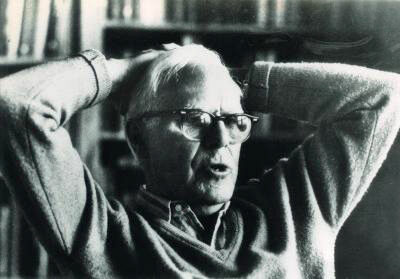
The Ambidextrous Universe
The Ambidextrous Universe is a non-fiction work by Martin Gardner. It came out in 1964.
- Published
- 1964
- Written by
- Martin Gardner
- Genre
- non-fiction
- Country of origin
- United States
All 6 facts, and where they come from
Facts
6 facts · 0 confirmed by two sources · 0 cited · 6 from one source
Where this comes from
Papalocal keeps its own record. It started from these sources; what each one said is kept here as it was copied, so a change on their side never changes this page by itself. Tap one to read its version.
What Wikidata says · copied November 16, 2026 · revision 2561095296
- Described as
- non-fiction work by Martin Gardner
- What it is
- written work
- Written by
- Martin Gardner
- Genre
- non-fiction
- Published
- 1964 · 1 reference
- Language
- English
- Country of origin
- United States · 1 reference
- Wikipedias with a page
- 4
Wikidata item Q5232230 (wikidata.org/wiki/Q5232230), public domain (CC0). Copied 2026-11-16.
What Wikipedia says · copied November 16, 2026 · revision 1384294053
The Ambidextrous Universe is a popular science book by Martin Gardner, covering aspects of symmetry and asymmetry in human culture, science and the wider universe. It culminates in a discussion of whether nature's conservation of parity (the symmetry of mirrored quantum systems) is ever violated, which had been proven experimentally in 1956.
The book was originally published in 1964 with the subtitle Left, Right, and the Fall of Parity, with a revised version following in 1969. A second edition was released in 1979 with the new subtitle Mirror Asymmetry and Time-Reversed Worlds. The third edition was released in 1990 under the title The New Ambidextrous Universe: Symmetry and Asymmetry from Mirror Reflections to Superstrings; this was re-released with minor revisions in 2005.
From the Wikipedia article “The Ambidextrous Universe” (en.wikipedia.org/wiki/The_Ambidextrous_Universe), by its contributors, under CC BY-SA 4.0 (creativecommons.org/licenses/by-sa/4.0/). Copied 2026-11-16; not changed.
Confirmed Two sources agree. Cited One source, and it names where it got it. One source One source, without a reference of its own. Sources disagree The sources disagree. We show the best-supported value and keep theirs below.