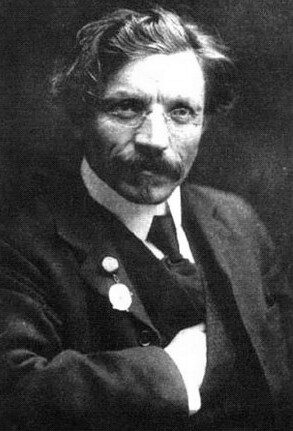
The Bloody Hoax
The Bloody Hoax is a 1912 novel by Sholem Aleichem.
- Published
- 1912
- Written by
- Sholem Aleichem
All 4 facts, and where they come from
Facts
4 facts · 0 confirmed by two sources · 0 cited · 4 from one source
Where this comes from
Papalocal keeps its own record. It started from these sources; what each one said is kept here as it was copied, so a change on their side never changes this page by itself. Tap one to read its version.
What Wikidata says · copied November 16, 2026 · revision 2403583214
- Described as
- 1912 novel by Sholem Aleichem
- What it is
- literary work
- Written by
- Sholem Aleichem
- Published
- 1912
- Language
- Yiddish
- Wikipedias with a page
- 4
Wikidata item Q59133763 (wikidata.org/wiki/Q59133763), public domain (CC0). Copied 2026-11-16.
What Wikipedia says · copied November 16, 2026 · revision 1375308447
The Bloody Hoax (Yiddish: דער בלוטיקער שפאס : א אויסערגעווענלעכער ראמאן, romanized: Der blutiker shpas: a oysergevenlekher roman) is a novel by Sholem Aleichem written in Yiddish. It was first published serialized in a Warsaw daily Haynt in 1912.
The idea was same as in The Prince and the Pauper: two school friends, a Russian, Grigory "Grisha" Popov, and a Jew, Hershel "Hershke" Rabinovich, decide to swap identities and to live each other's life for a year. The title refers to the twist of the plot: the Russian (Christian) young man fell victim of a blood libel, being accused of killing a Christian child. It was hastily written during the times of the Beilis Affair, and a vast majority of contemporary and later critics considered it to be a failure. Probably for this reason it was not republished nor translated for quite a long time. It later times it started to be considered of historical/ethnographical interest.
From the Wikipedia article “The Bloody Hoax” (en.wikipedia.org/wiki/The_Bloody_Hoax), by its contributors, under CC BY-SA 4.0 (creativecommons.org/licenses/by-sa/4.0/). Copied 2026-11-16; not changed.
Confirmed Two sources agree. Cited One source, and it names where it got it. One source One source, without a reference of its own. Sources disagree The sources disagree. We show the best-supported value and keep theirs below.