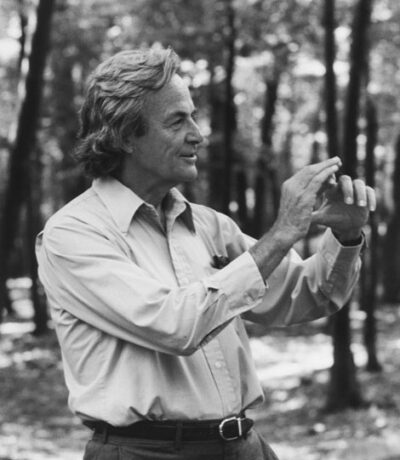
The Character of Physical Law
The Character of Physical Law is a non-fiction work by Richard Feynman. It came out in 1965.
- Published
- 1965
- Written by
- Richard Feynman
- Genre
- non-fiction
- Country of origin
- United States
All 8 facts, and where they come from
Facts
8 facts · 0 confirmed by two sources · 0 cited · 8 from one source
Where this comes from
Papalocal keeps its own record. It started from these sources; what each one said is kept here as it was copied, so a change on their side never changes this page by itself. Tap one to read its version.
What Wikidata says · copied November 16, 2026 · revision 2559790257
- Described as
- non-fiction work by Richard Feynman
- Other names
- Character of Physical Law
- What it is
- written work; audiovisual work
- Written by
- Richard Feynman
- Genre
- non-fiction · 1 reference
- Published
- 1965
- Language
- English
- Country of origin
- United States · 1 reference
- Official website
- https://feynmanlectures.caltech.edu/messenger.html
- Wikipedias with a page
- 9
Wikidata item Q4351947 (wikidata.org/wiki/Q4351947), public domain (CC0). Copied 2026-11-16.
What Wikipedia says · copied November 16, 2026 · revision 1384270094
The Character of Physical Law is a series of seven lectures by physicist Richard Feynman concerning the nature of the laws of physics. Feynman delivered the lectures in 1964 at Cornell University, as part of the Messenger Lectures series. The BBC recorded the lectures and published a book under the same title the following year; Cornell published the BBC's recordings online in September 2015.In 2017 MIT Press published, with a new foreword by Frank Wilczek, a paperback reprint of the 1965 book.
From the Wikipedia article “The Character of Physical Law” (en.wikipedia.org/wiki/The_Character_of_Physical_Law), by its contributors, under CC BY-SA 4.0 (creativecommons.org/licenses/by-sa/4.0/). Copied 2026-11-16; not changed.
Confirmed Two sources agree. Cited One source, and it names where it got it. One source One source, without a reference of its own. Sources disagree The sources disagree. We show the best-supported value and keep theirs below.