The Charterhouse of Parma
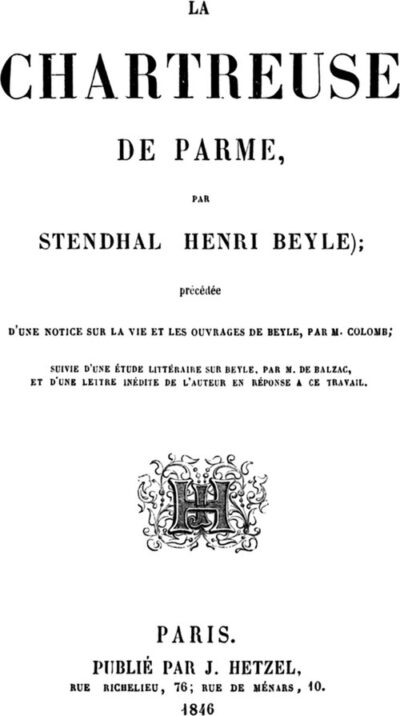
The Charterhouse of Parma is a novel by Stendhal (1839).
All 9 facts, and where they come from
Facts
9 facts · 0 confirmed by two sources · 0 cited · 9 from one source
Where this comes from
Papalocal keeps its own record. It started from these sources; what each one said is kept here as it was copied, so a change on their side never changes this page by itself. Tap one to read its version.
What Wikidata says · copied November 17, 2026 · revision 2515896104
- Described as
- novel by Stendhal (1839)
- What it is
- literary work
- Written by
- Stendhal
- Genre
- Bildungsroman; literary realism; historical fiction
- Published
- March 1839; 1839
- Language
- French
- Country of origin
- France
- Came out
- 1838
- Wikipedias with a page
- 33
Wikidata item Q1165714 (wikidata.org/wiki/Q1165714), public domain (CC0). Copied 2026-11-17.
What Wikipedia says · copied November 17, 2026 · revision 1384233418
The Charterhouse of Parma (French: La Chartreuse de Parme) is a novel by French writer Stendhal, published in 1839. Telling the story of an Italian nobleman in the Napoleonic era and later, it was admired by Balzac, Tolstoy, André Gide, Lampedusa, Henry James, and Ernest Hemingway. It was inspired by an inauthentic Italian account of the dissolute youth of Alessandro Farnese. The novel has been adapted for opera, film and television.
The title refers to a Carthusian monastery, which is only mentioned on the last page of the novel and does not figure significantly in the plot.
From the Wikipedia article “The Charterhouse of Parma” (en.wikipedia.org/wiki/The_Charterhouse_of_Parma), by its contributors, under CC BY-SA 4.0 (creativecommons.org/licenses/by-sa/4.0/). Copied 2026-11-17; not changed.
Confirmed Two sources agree. Cited One source, and it names where it got it. One source One source, without a reference of its own. Sources disagree The sources disagree. We show the best-supported value and keep theirs below.
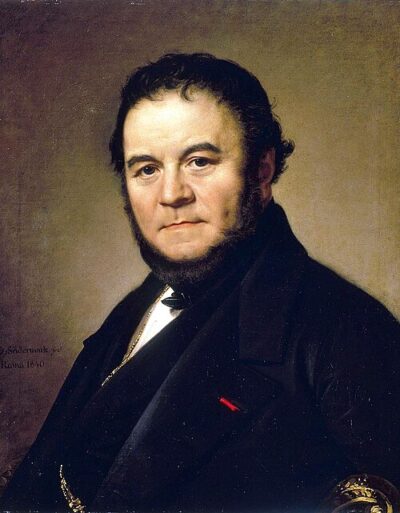
Picture: Henri Beyle, via Wikimedia Commons · Public domain