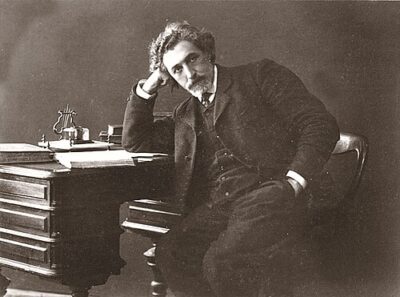
The Dybbuk
The Dybbuk is a play written by S. Ansky. It came out in 1922. It was written by S. An-sky.
- Published
- 1922
- Written by
- S. An-sky
- Genre
- drama
All 7 facts, and where they come from
Facts
7 facts · 0 confirmed by two sources · 0 cited · 7 from one source
Where this comes from
Papalocal keeps its own record. It started from these sources; what each one said is kept here as it was copied, so a change on their side never changes this page by itself. Tap one to read its version.
What Wikidata says · copied November 18, 2026 · revision 2549988970
- Described as
- play written by S. Ansky
- Other names
- Der dibeḳ, ha-Dibuḳ, הדיבוק
- What it is
- creative work; literary work
- Written by
- S. An-sky
- Music by
- Joel Engel
- Genre
- drama · 1 reference
- Published
- 1922
- Language
- Yiddish
- Wikipedias with a page
- 19
Wikidata item Q2915504 (wikidata.org/wiki/Q2915504), public domain (CC0). Copied 2026-11-18.
What Wikipedia says · copied November 18, 2026 · revision 1380174500
The Dybbuk, or Between Two Worlds (Russian: Меж двух миров [Дибук], trans. Mezh dvukh mirov [Dibuk]; Yiddish: צווישן צוויי וועלטן - דער דִבּוּק, Tsvishn Tsvey Veltn – der Dibuk) is a play by S. An-sky, written between 1913 and 1916. It was originally written in Russian and later translated into Yiddish by An-sky himself. The Dybbuk had its world premiere in that language, performed by the Vilna Troupe at Warsaw in 1920. A Hebrew version was prepared by Hayim Nahman Bialik and staged in Moscow at Habima Theater in 1922.
The play, which depicts the possession of a young woman by the malicious spirit – known as dybbuk in Jewish folklore – of her dead beloved, became a canonical work of both Hebrew and Yiddish theatre, being further translated and performed around the world.
From the Wikipedia article “The Dybbuk” (en.wikipedia.org/wiki/The_Dybbuk), by its contributors, under CC BY-SA 4.0 (creativecommons.org/licenses/by-sa/4.0/). Copied 2026-11-18; not changed.
Confirmed Two sources agree. Cited One source, and it names where it got it. One source One source, without a reference of its own. Sources disagree The sources disagree. We show the best-supported value and keep theirs below.
Picture: Wikimedia Commons: Dybbuk22.png · See Commons file page