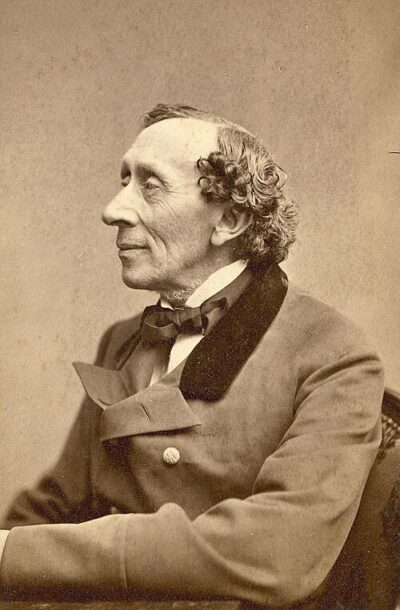
The Emperor's New Clothes
The Emperor's New Clothes is a fairytale by Hans Christian Andersen. It came out in 1837.
- Published
- April 7, 1837
- Written by
- Hans Christian Andersen
- Genre
- literary fairy tale
- Country of origin
- Denmark
All 6 facts, and where they come from
Facts
6 facts · 0 confirmed by two sources · 1 cited · 5 from one source
Where this comes from
Papalocal keeps its own record. It started from these sources; what each one said is kept here as it was copied, so a change on their side never changes this page by itself. Tap one to read its version.
What Wikidata says · copied November 17, 2026 · revision 2555905777
- Described as
- fairytale by Hans Christian Andersen
- Other names
- Kejserens nye klæder
- What it is
- literary work
- Written by
- Hans Christian Andersen
- Genre
- literary fairy tale
- Published
- April 7, 1837 · 1 reference
- Language
- Danish
- Country of origin
- Denmark
- Wikipedias with a page
- 60
Wikidata item Q11866 (wikidata.org/wiki/Q11866), public domain (CC0). Copied 2026-11-17.
What Wikipedia says · copied November 17, 2026 · revision 1386185280
"The Emperor's New Clothes" (Danish: Kejserens nye klæder [ˈkʰɑjsɐns ˈnyˀə ˈkʰleːðə, - ˈkʰleːɐ̯]) is a literary fairy tale written by the Danish author Hans Christian Andersen, about a vain emperor who gets exposed before his subjects. The tale has been translated into over 100 languages.
"The Emperor's New Clothes" was first published with "The Little Mermaid" in Copenhagen, Denmark, by C. A. Reitzel, on 7 April 1837, as the third and final installment of Andersen's Fairy Tales Told for Children. The tale has been adapted to various media, and the story's title, the phrase "the Emperor has no clothes", and variations thereof have been adopted for use in numerous other works and as idioms.
From the Wikipedia article “The Emperor's New Clothes” (en.wikipedia.org/wiki/The_Emperor's_New_Clothes), by its contributors, under CC BY-SA 4.0 (creativecommons.org/licenses/by-sa/4.0/). Copied 2026-11-17; not changed.
Confirmed Two sources agree. Cited One source, and it names where it got it. One source One source, without a reference of its own. Sources disagree The sources disagree. We show the best-supported value and keep theirs below.
Picture: Wikimedia Commons: Emperor Clothes 01.jpg · See Commons file page