The Frost King
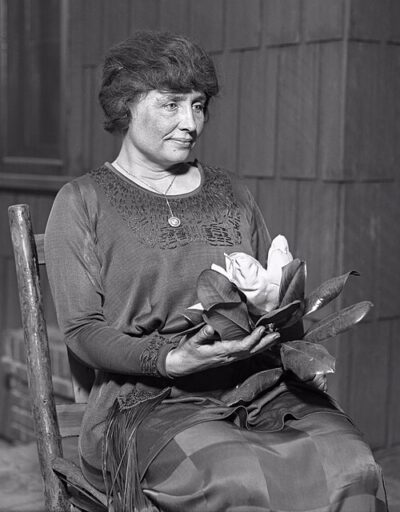
The Frost King is a short story by Helen Keller. It came out in 1892.
- Published
- January 1892
- Written by
- Helen Keller
- Genre
- children's literature
- Country of origin
- United States
All 7 facts, and where they come from
Facts
7 facts · 0 confirmed by two sources · 0 cited · 7 from one source
Where this comes from
Papalocal keeps its own record. It started from these sources; what each one said is kept here as it was copied, so a change on their side never changes this page by itself. Tap one to read its version.
What Wikidata says · copied November 16, 2026 · revision 2320730629
- Described as
- short story by Helen Keller
- What it is
- literary work
- Written by
- Helen Keller
- Genre
- children's literature; fantasy
- Published
- January 1892
- Language
- English
- Country of origin
- United States
- Wikipedias with a page
- 3
Wikidata item Q7735378 (wikidata.org/wiki/Q7735378), public domain (CC0). Copied 2026-11-16.
What Wikipedia says · copied November 16, 2026 · revision 1383119190
"The Frost King" (originally titled "Autumn Leaves") is a short story about King Jack Frost written by Helen Keller, then 11. Keller's teacher, Anne Sullivan, had mentioned that the autumn leaves were "painted ruby, emerald, gold, crimson, and brown", and Keller, by her own account, imagined fairies doing the work. Keller wrote a story about how a cask of jewels, being transported by fairy servants, had melted in the sun and covered the leaves.
As a birthday gift, Keller sent the story to Michael Anagnos, the head of the Perkins School for the Blind, who published the story in the January 1892 edition of The Mentor, the Perkins alumni magazine. It was picked up by The Goodson Gazette, a journal on deaf-blind education, based in Virginia.
From the Wikipedia article “The Frost King” (en.wikipedia.org/wiki/The_Frost_King), by its contributors, under CC BY-SA 4.0 (creativecommons.org/licenses/by-sa/4.0/). Copied 2026-11-16; not changed.
Confirmed Two sources agree. Cited One source, and it names where it got it. One source One source, without a reference of its own. Sources disagree The sources disagree. We show the best-supported value and keep theirs below.