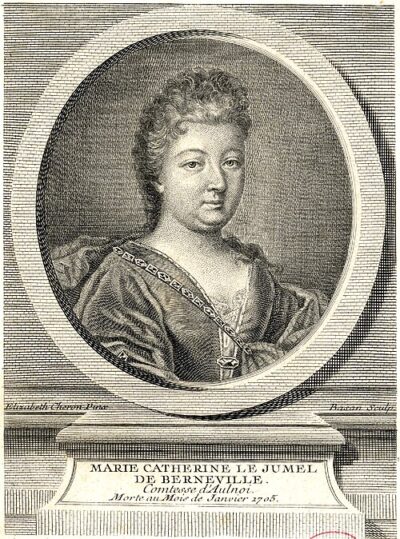
The Green Serpent
The Green Serpent is a French fairy tale by Marie Catherine d'Aulnoy. It came out in 1697. It was written by Madame d'Aulnoy.
- Came out
- 1697
- Written by
- Madame d'Aulnoy
All 4 facts, and where they come from
Facts
4 facts · 0 confirmed by two sources · 0 cited · 4 from one source
Where this comes from
Papalocal keeps its own record. It started from these sources; what each one said is kept here as it was copied, so a change on their side never changes this page by itself. Tap one to read its version.
What Wikidata says · copied November 17, 2026 · revision 2563659480
- Described as
- French fairy tale by Marie Catherine d'Aulnoy
- Other names
- Green Serpent
- What it is
- literary work
- Written by
- Madame d'Aulnoy · 1 reference
- Language
- French
- Came out
- 1697
- Wikipedias with a page
- 7
Wikidata item Q7738208 (wikidata.org/wiki/Q7738208), public domain (CC0). Copied 2026-11-17.
What Wikipedia says · copied November 17, 2026 · revision 1386192954
Le Serpentin Vert (translated as Green Serpent or Green Dragon) is a French fairy tale written by Marie Catherine d'Aulnoy, popular in its day and representative of European folklore, that was published in her book New Tales, or Fairies in Fashion (Contes Nouveaux ou Les Fées à la Mode), in 1698. The serpent is representative of a European dragon. His description is: "he has green wings, a many-coloured body, ivory jaws, fiery eyes, and long, bristling hair."
The Green Dragon is really a handsome king placed under a spell for seven years by Magotine, a wicked fairy. In many ways the tale is based on the story of Eros and Psyche, to which the narration pays conscious homage when referring to the "discovery" of the Green Dragon.
From the Wikipedia article “The Green Serpent” (en.wikipedia.org/wiki/The_Green_Serpent), by its contributors, under CC BY-SA 4.0 (creativecommons.org/licenses/by-sa/4.0/). Copied 2026-11-17; not changed.
Confirmed Two sources agree. Cited One source, and it names where it got it. One source One source, without a reference of its own. Sources disagree The sources disagree. We show the best-supported value and keep theirs below.