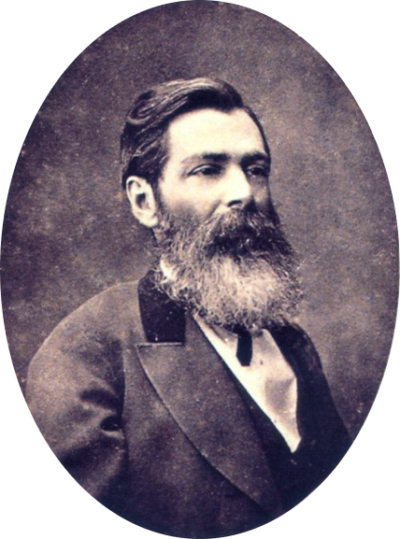
The Guarani
The Guarani is a novel by José de Alencar. It came out in 1857.
- Published
- 1857
- Written by
- José de Alencar
- Country of origin
- Brazil
All 7 facts, and where they come from
Facts
7 facts · 0 confirmed by two sources · 0 cited · 7 from one source
Where this comes from
Papalocal keeps its own record. It started from these sources; what each one said is kept here as it was copied, so a change on their side never changes this page by itself. Tap one to read its version.
What Wikidata says · copied November 17, 2026 · revision 2549967904
- Described as
- novel by José de Alencar
- What it is
- literary work
- Written by
- José de Alencar
- Published
- 1857
- Language
- Brazilian Portuguese; Portuguese
- Country of origin
- Brazil
- Followed by
- Iracema
- Wikipedias with a page
- 9
Wikidata item Q2008330 (wikidata.org/wiki/Q2008330), public domain (CC0). Copied 2026-11-17.
What Wikipedia says · copied November 17, 2026 · revision 1384269063
The Guarani: Brazilian Romance (Portuguese: O Guarani: Romance Brasileiro) is an 1857 Brazilian novel written by José de Alencar. It was first serialized in the newspaper Diário do Rio de Janeiro, but due to its enormous success Alencar decided to compile his writing in a volume. A plausible explanation for this success might be in the fact that the novel spoke of freedom and independence, arguing for a nativeness that could be found in tropical nature and in the indigenous people of Brazil.
Years later the novel was turned into an opera performed in Italian and called Il Guarany (1870), by Carlos Gomes, among other places it was presented in Milan and New York (it is a known fact that the author did not appreciate the final result). The Guarani is regarded a foundational text of Brazilian Romanticism, but it gained international projection by being translated into Spanish, German (Der Guarany, Brasilianischer Roman, Maximillian Emerich, 1876) and English (The Guarany, Brazilian novel, James W. Hawes, 1893).
The novel is still widely read nowadays, especially at Brazilian schools as an introduction to novel reading, but also by anyone who enjoys a thrilling adventure story. Literary criticism has tended to link The Guarani to the works of Fenimore Cooper, Chateaubriand and the noble savage from the Rousseauian tradition. However, this interpretation of the novel has become outdated as recent academic works show also how dark, sexual, gothic and lyrical (over narrative, unlike the Fenimore Cooper model) the novel is.
From the Wikipedia article “The Guarani” (en.wikipedia.org/wiki/The_Guarani), by its contributors, under CC BY-SA 4.0 (creativecommons.org/licenses/by-sa/4.0/). Copied 2026-11-17; not changed.
Confirmed Two sources agree. Cited One source, and it names where it got it. One source One source, without a reference of its own. Sources disagree The sources disagree. We show the best-supported value and keep theirs below.
Picture: Wikimedia Commons: Oguarani.jpg · See Commons file page