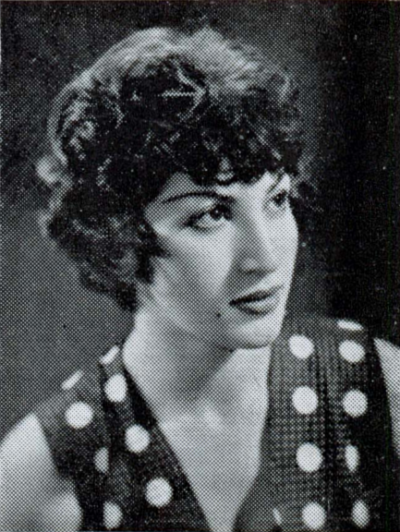
The House Is Black
The House Is Black is a 1962 film by Forough Farrokhzad. It was directed by Forugh Farrokhzad. It stars Ebrahim Golestan and Forugh Farrokhzad.
- Released
- 1962
- Directed by
- Forugh Farrokhzad
- Genre
- documentary film
- Country of origin
- Iran
All 9 facts, and where they come from
Facts
9 facts · 0 confirmed by two sources · 0 cited · 9 from one source
Where this comes from
Papalocal keeps its own record. It started from these sources; what each one said is kept here as it was copied, so a change on their side never changes this page by itself. Tap one to read its version.
What Wikidata says · copied November 17, 2026 · revision 2534689315
- Described as
- 1962 film by Forough Farrokhzad
- Other names
- House Is Black
- What it is
- short film
- Directed by
- Forugh Farrokhzad
- Screenplay by
- Forugh Farrokhzad
- Starring
- Ebrahim Golestan; Forugh Farrokhzad
- Genre
- documentary film
- Released
- 1962
- Original language
- Persian
- Country of origin
- Iran
- Wikipedias with a page
- 14
Wikidata item Q1168890 (wikidata.org/wiki/Q1168890), public domain (CC0). Copied 2026-11-17.
What Wikipedia says · copied November 17, 2026 · revision 1381317466
The House Is Black (Persian: خانه سیاه است) is an acclaimed Iranian documentary short film directed by Forugh Farrokhzad.
The film is a look at life and suffering in a leper colony and focuses on the human condition and the beauty of creation. It is spliced with Farrokhzad's narration of quotes from the Old Testament, the Qur'an and her own poetry. The film features footage from the Bababaghi Hospice leper colony. It was the only film she directed before her death in 1967. After shooting this film she adopted a child from the colony, her son Hossein.
In 2019, a restored print of the film was debuted at the Venice International Film Festival.
From the Wikipedia article “The House Is Black” (en.wikipedia.org/wiki/The_House_Is_Black), by its contributors, under CC BY-SA 4.0 (creativecommons.org/licenses/by-sa/4.0/). Copied 2026-11-17; not changed.
Confirmed Two sources agree. Cited One source, and it names where it got it. One source One source, without a reference of its own. Sources disagree The sources disagree. We show the best-supported value and keep theirs below.