The Hunting of the Snark
The Hunting of the Snark is a nonsense poem by Lewis Carroll. It came out in 1876.
- Published
- 1876
- Written by
- Lewis Carroll
- Genre
- nonsense verse
- Country of origin
- United Kingdom
All 6 facts, and where they come from
Facts
6 facts · 0 confirmed by two sources · 1 cited · 5 from one source
Where this comes from
Papalocal keeps its own record. It started from these sources; what each one said is kept here as it was copied, so a change on their side never changes this page by itself. Tap one to read its version.
What Wikidata says · copied November 17, 2026 · revision 2549922533
- Described as
- nonsense poem by Lewis Carroll
- Other names
- Hunting of the Snark
- What it is
- literary work
- Written by
- Lewis Carroll · 1 reference
- Genre
- nonsense verse
- Published
- 1876
- Language
- English
- Country of origin
- United Kingdom · 1 reference
- Wikipedias with a page
- 25
Wikidata item Q1079681 (wikidata.org/wiki/Q1079681), public domain (CC0). Copied 2026-11-17.
What Wikipedia says · copied November 17, 2026 · revision 1384221388
The Hunting of the Snark, subtitled An Agony, in Eight Fits, is a poem by the English writer Lewis Carroll. It is typically categorised as a nonsense poem. Written between 1874 and 1876, it borrows the setting, some creatures, and eight portmanteau words from Carroll's earlier poem "Jabberwocky" in his children's novel Through the Looking-Glass (1871).
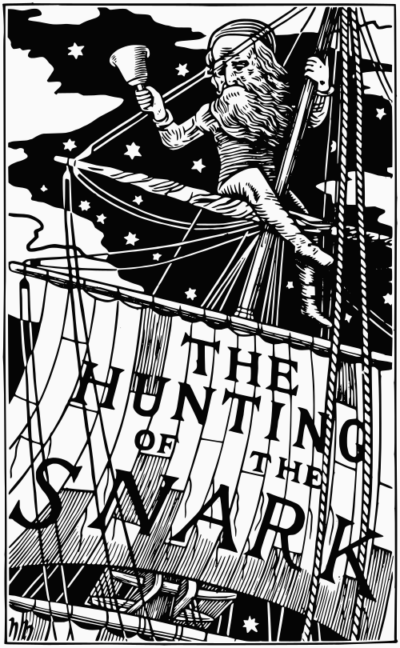
Macmillan published The Hunting of the Snark in the United Kingdom at the end of March 1876, with nine illustrations by Henry Holiday. It had mixed reviews from reviewers, who found it strange. The first printing of the poem consisted of 10,000 copies. There were two reprints by the conclusion of the year; in total, the poem was reprinted 17 times between 1876 and 1908. The poem also has been adapted for musicals, movies, opera, plays, and music.
The narrative follows a crew of ten trying to hunt the Snark, a creature which may turn out to be a highly dangerous Boojum. The only crew member to find the Snark quietly vanishes, leading the narrator to explain that the Snark was a Boojum after all.
Carroll dedicated the poem to young Gertrude Chataway, whom he met in the English seaside town Sandown on the Isle of Wight in 1875. Included with many copies of the first edition of the poem was Carroll's religious tract, An Easter Greeting to Every Child Who Loves "Alice".
Various meanings in the poem have been proposed, among them existential angst, an allegory for tuberculosis, and a mockery of the Tichborne case.
While Carroll denied knowing the meaning behind the poem, he agreed in an 1897 reply to a reader's letter with an interpretation of the poem as an allegory for the pursuit of happiness. Henry Holiday, the illustrator of the poem, considered the poem a "tragedy".
From the Wikipedia article “The Hunting of the Snark” (en.wikipedia.org/wiki/The_Hunting_of_the_Snark), by its contributors, under CC BY-SA 4.0 (creativecommons.org/licenses/by-sa/4.0/). Copied 2026-11-17; not changed.
Confirmed Two sources agree. Cited One source, and it names where it got it. One source One source, without a reference of its own. Sources disagree The sources disagree. We show the best-supported value and keep theirs below.
Picture: Henry Holiday, via Wikimedia Commons · Public domain