The Lady of the Camellias
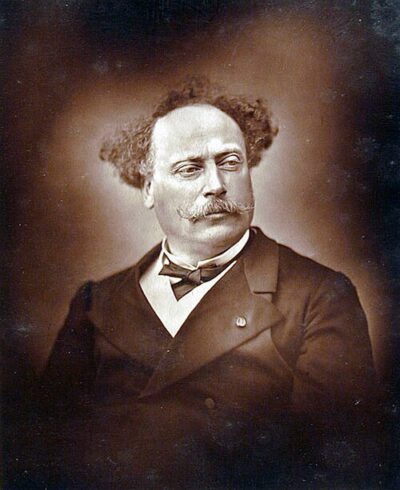
The Lady of the Camellias is a 1848 novel by Alexandre Dumas fils.
- Published
- 1848
- Written by
- Alexandre Dumas fils
- Genre
- romantic fiction
- Country of origin
- France
All 7 facts, and where they come from
Facts
7 facts · 0 confirmed by two sources · 2 cited · 5 from one source
Where this comes from
Papalocal keeps its own record. It started from these sources; what each one said is kept here as it was copied, so a change on their side never changes this page by itself. Tap one to read its version.
What Wikidata says · copied November 17, 2026 · revision 2560676166
- Described as
- 1848 novel by Alexandre Dumas fils
- Other names
- La Dame aux camélias
- What it is
- literary work
- Written by
- Alexandre Dumas fils · 1 reference
- Genre
- romantic fiction; autobiography
- Published
- 1848 · 1 reference
- Language
- French
- Country of origin
- France
- Wikipedias with a page
- 47
Wikidata item Q898795 (wikidata.org/wiki/Q898795), public domain (CC0). Copied 2026-11-17.
What Wikipedia says · copied November 17, 2026 · revision 1374089213
The Lady of the Camellias (French: La Dame aux Camélias) is a novel by Alexandre Dumas fils. First published in 1848 and subsequently adapted by Dumas for the stage, the play premiered at the Théâtre du Vaudeville in Paris, France, on February 2, 1852. It was an instant success. Shortly thereafter, Italian composer Giuseppe Verdi set about putting the story to music in the 1853 opera La traviata, with female protagonist Marguerite Gautier renamed Violetta Valéry.
In some of the English-speaking world, The Lady of the Camellias became known as Camille, and sixteen versions have been performed at Broadway theatres alone. The title character is Marguerite Gautier, who is based on Marie Duplessis, the real-life lover of the author.
From the Wikipedia article “The Lady of the Camellias” (en.wikipedia.org/wiki/The_Lady_of_the_Camellias), by its contributors, under CC BY-SA 4.0 (creativecommons.org/licenses/by-sa/4.0/). Copied 2026-11-17; not changed.
Confirmed Two sources agree. Cited One source, and it names where it got it. One source One source, without a reference of its own. Sources disagree The sources disagree. We show the best-supported value and keep theirs below.
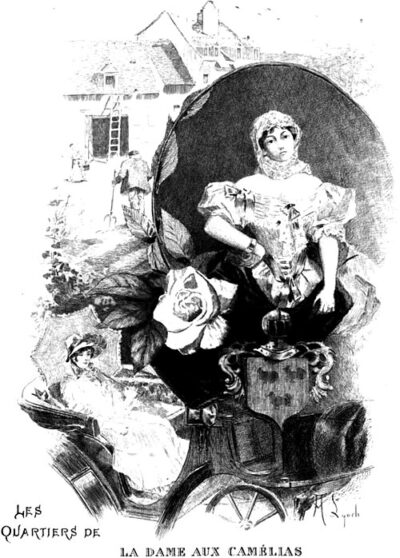
Picture: Albert Lynch, via Wikimedia Commons · Public domain