The Last Judgment
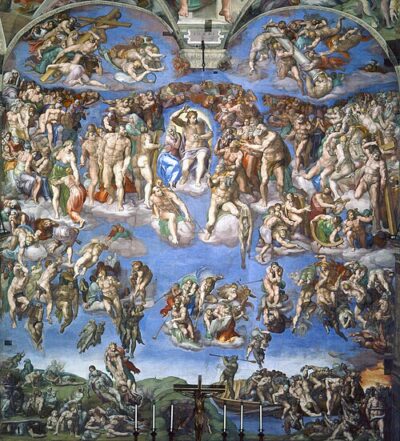
The Last Judgment is a fresco by Michelangelo in the Sistine Chapel. It is based on Day of Judgment.
- Came out
- 16th century
- Created by
- Michelangelo
- Genre
- religious art
All 6 facts, and where they come from
Facts
6 facts · 0 confirmed by two sources · 2 cited · 4 from one source
Where this comes from
Papalocal keeps its own record. It started from these sources; what each one said is kept here as it was copied, so a change on their side never changes this page by itself. Tap one to read its version.
What Wikidata says · copied November 17, 2026 · revision 2567152235
- Described as
- fresco by Michelangelo in the Sistine Chapel
- Other names
- Sistine Chapel Altar Wall, Fresco, The Last Judgment (Fresco, Sistine Chapel Altar Wall), Michelangelo Buonarroti, 1475-1564. Michelangelo, la Cappella Sistina
- What it is
- fresco
- Created by
- Michelangelo · 1 reference
- Genre
- religious art
- Based on
- Day of Judgment
- Came out
- 16th century · 2 references
- Country
- Vatican City
- Wikipedias with a page
- 51
Wikidata item Q567861 (wikidata.org/wiki/Q567861), public domain (CC0). Copied 2026-11-17.
What Wikipedia says · copied November 17, 2026 · revision 1365309709
The Last Judgment (Italian: Il Giudizio Universale) is a fresco by the Italian Renaissance painter Michelangelo covering the whole altar wall of the Sistine Chapel in Vatican City. It is a depiction of the Second Coming of Christ and the final and eternal judgment by God of all humanity. The dead rise and descend to their fates, as judged by Christ who is surrounded by prominent saints. Altogether there are over 300 figures, with nearly all the males and angels originally shown as nudes; many were later partly covered up by painted draperies, of which some remain after recent cleaning and restoration.
The work took over four years to complete between 1536 and 1541 (preparation of the altar wall began in 1535). Michelangelo began working on it 25 years after finishing the Sistine Chapel ceiling, and was nearly 67 at its completion. He had originally accepted the commission from Pope Clement VII, but it was completed under Pope Paul III whose stronger reforming views probably affected the final treatment.
In the lower part of the fresco, Michelangelo followed tradition in showing the saved ascending at the left and the damned descending at the right. In the upper part, the inhabitants of Heaven are joined by the newly saved. The fresco is more monochromatic than the ceiling frescoes and is dominated by the tones of flesh and sky. The cleaning and restoration of the fresco, however, revealed a greater chromatic range than previously apparent. Orange, green, yellow, and blue are scattered throughout, animating and unifying the complex scene.
The reception of the painting was mixed from the start, with much praise but also criticism on both religious and artistic grounds. Both the amount of nudity and the muscular style of the bodies has been one area of contention, and the overall composition another.
From the Wikipedia article “The Last Judgment (Michelangelo)” (en.wikipedia.org/wiki/The_Last_Judgment_(Michelangelo)), by its contributors, under CC BY-SA 4.0 (creativecommons.org/licenses/by-sa/4.0/). Copied 2026-11-17; not changed.
Confirmed Two sources agree. Cited One source, and it names where it got it. One source One source, without a reference of its own. Sources disagree The sources disagree. We show the best-supported value and keep theirs below.
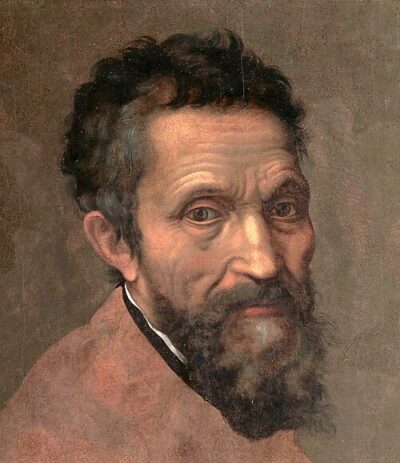
Picture: Michelangelo, via Wikimedia Commons · Public domain