The Layover
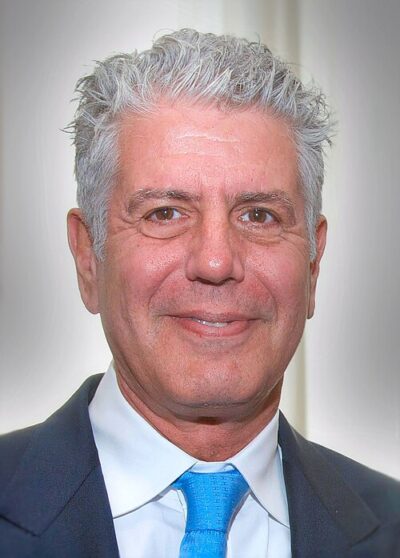
The Layover is a television series. It stars Anthony Bourdain.
- Country of origin
- United States
All 5 facts, and where they come from
Facts
5 facts · 0 confirmed by two sources · 1 cited · 4 from one source
Where this comes from
Papalocal keeps its own record. It started from these sources; what each one said is kept here as it was copied, so a change on their side never changes this page by itself. Tap one to read its version.
What Wikidata says · copied November 16, 2026 · revision 2488910353
- Described as
- television series
- What it is
- television series
- Starring
- Anthony Bourdain · 1 reference
- Original language
- English · 1 reference
- Country of origin
- United States
- Official website
- http://www.travelchannel.com/tv-shows/the-layover
- Wikipedias with a page
- 3
Wikidata item Q7746466 (wikidata.org/wiki/Q7746466), public domain (CC0). Copied 2026-11-16.
What Wikipedia says · copied November 16, 2026 · revision 1368592655
The Layover is a travel and food show on the Travel Channel hosted by Anthony Bourdain. The show premiered on November 21, 2011 in an episode based on Singapore. The format and the content of the show are based on what a traveler can do, eat, visit and enjoy within 24 to 48 hours in a city. Each episode starts with the host landing at the city, with the clock starting the countdown until the time that he will leave the city. As a seasoned traveler, he meets up with locals and explores the city in and out, within matters of hours, both the touristy way and the local way.
On February 15, 2012, Travel Channel renewed the show for the 2012/2013 season, selecting November 19, 2012 for the second-season premiere; featured cities for the season include Atlanta, Chicago, Dublin, New Orleans, Paris, Philadelphia, São Paulo, Seattle, Toronto, and Taipei.
From the Wikipedia article “The Layover (TV series)” (en.wikipedia.org/wiki/The_Layover_(TV_series)), by its contributors, under CC BY-SA 4.0 (creativecommons.org/licenses/by-sa/4.0/). Copied 2026-11-16; not changed.
Confirmed Two sources agree. Cited One source, and it names where it got it. One source One source, without a reference of its own. Sources disagree The sources disagree. We show the best-supported value and keep theirs below.