The Lord of the Rings
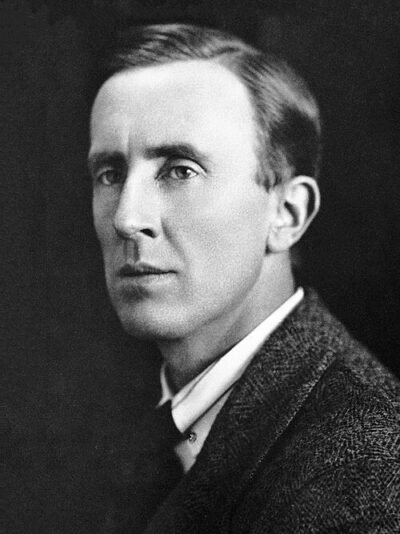
The Lord of the Rings is a 1954–1955 fantasy novel trilogy by J. R. R. Tolkien. It won the NPR Top 100 Science Fiction and Fantasy Books and 3 more.
- Published
- 1954
- Written by
- J. R. R. Tolkien
- Genre
- fantasy
- Country of origin
- United Kingdom
All 17 facts, and where they come from
Facts
17 facts · 0 confirmed by two sources · 4 cited · 13 from one source
Where this comes from
Papalocal keeps its own record. It started from these sources; what each one said is kept here as it was copied, so a change on their side never changes this page by itself. Tap one to read its version.
What Wikidata says · copied November 17, 2026 · revision 2563748237
- Described as
- 1954–1955 fantasy novel trilogy by J. R. R. Tolkien
- Other names
- Lord of the Rings, TLotR, LotR
- What it is
- novel series; literary trilogy; literary work
- Written by
- J. R. R. Tolkien · 1 reference
- Publisher
- George Allen & Unwin Limited
- Genre
- fantasy; high fantasy · 1 reference; adventure fiction
- Published
- 1954 · 1 reference
- Language
- English
- Country of origin
- United Kingdom
- Comes after
- The Hobbit
- Followed by
- The Silmarillion
- Awards
- NPR Top 100 Science Fiction and Fantasy Books (2011); Prometheus Award (2009); Le Monde's 100 Books of the Century (1999); International Fantasy Award for Best Fiction (1957) · 1 reference
- Wikipedias with a page
- 149
Wikidata item Q15228 (wikidata.org/wiki/Q15228), public domain (CC0). Copied 2026-11-17.
What Wikipedia says · copied November 17, 2026 · revision 1385945039
The Lord of the Rings is an epic high fantasy novel written by the English author and scholar J. R. R. Tolkien. Set in Middle-earth, the story began as a sequel to Tolkien's 1937 children's book The Hobbit but eventually developed into a much larger work. Written in stages between 1937 and 1949, The Lord of the Rings is one of the best-selling books ever written, with over 150 million copies sold.
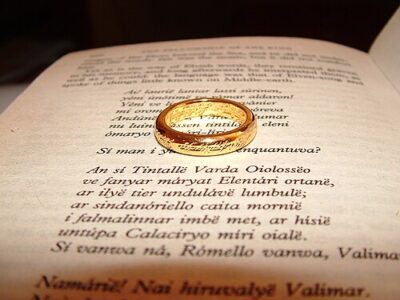
The title refers to the story's main antagonist, the Dark Lord Sauron, who in an earlier age created the One Ring, allowing him to rule the other Rings of Power given to men, dwarves, and elves, in his campaign to conquer all of Middle-earth. From homely beginnings in the Shire, a hobbit land reminiscent of the English countryside, the story ranges across Middle-earth, following the quest to destroy the One Ring, seen mainly through the eyes of the hobbits Frodo, Sam, Merry, and Pippin. Aiding the hobbits are the wizard Gandalf, the men Aragorn and Boromir, the elf Legolas, and the dwarf Gimli, who unite as the Company of the Ring to rally the Free Peoples of Middle-earth against Sauron's armies and give Frodo a chance to destroy the One Ring in the fires of Mount Doom.
Tolkien drew inspiration from various influences for the story, including philology, mythology, Christianity, earlier fantasy works, and his own experiences in the First World War. Although the work is often called a trilogy, Tolkien intended it to be a single volume in a two-volume set, along with The Silmarillion. For economic reasons, it was first published over the course of a year, from 29 July 1954 to 20 October 1955, in three volumes rather than one, under the titles The Fellowship of the Ring, The Two Towers, and The Return of the King; The Silmarillion appeared only after Tolkien's death. The work is divided internally into six books, two per volume, with several appendices of chronologies, genealogies, and linguistic information. These three volumes were later published as a boxed set in 1957, and finally as a single volume in 1968, following Tolkien's original intent.
After an initial mixed reception by the literary establishment, The Lord of the Rings has been the subject of extensive analysis of its themes, literary devices, and origins. It is considered one of the most influential fantasy books ever written, and has helped to create and shape the modern fantasy genre. Since release, it has been reprinted many times and translated into at least 38 languages. Its enduring popularity has led to numerous references in popular culture, the founding of many societies by fans of Tolkien's works, and the publication of many books about Tolkien and his works. It has inspired many derivative works, including paintings, music, films, television, video games, and board games. Award-winning adaptations of The Lord of the Rings have been made for radio, theatre, and film. It was named Britain's best-loved novel of all time in a 2003 poll by the BBC called The Big Read.
From the Wikipedia article “The Lord of the Rings” (en.wikipedia.org/wiki/The_Lord_of_the_Rings), by its contributors, under CC BY-SA 4.0 (creativecommons.org/licenses/by-sa/4.0/). Copied 2026-11-17; not changed.
Confirmed Two sources agree. Cited One source, and it names where it got it. One source One source, without a reference of its own. Sources disagree The sources disagree. We show the best-supported value and keep theirs below.
Picture: Zanastardust, via Wikimedia Commons · CC BY 2.0