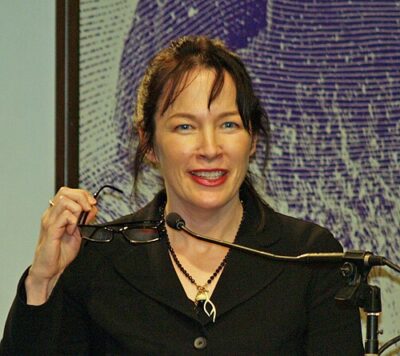
The Lovely Bones
The Lovely Bones is a 2002 novel by Alice Sebold. It came out in 2003. It won the Bram Stoker Award for Best First Novel.
- Published
- 2003
- Written by
- Alice Sebold
- Genre
- fantasy
- Country of origin
- United States
All 10 facts, and where they come from
Facts
10 facts · 0 confirmed by two sources · 2 cited · 8 from one source
Where this comes from
Papalocal keeps its own record. It started from these sources; what each one said is kept here as it was copied, so a change on their side never changes this page by itself. Tap one to read its version.
What Wikidata says · copied November 17, 2026 · revision 2565213967
- Described as
- 2002 novel by Alice Sebold
- What it is
- literary work
- Written by
- Alice Sebold · 1 reference
- Publisher
- Little, Brown and Company
- Genre
- fantasy; Bildungsroman; psychological fiction
- Published
- 2003
- Language
- English
- Country of origin
- United States
- Awards
- Bram Stoker Award for Best First Novel (2002) · 1 reference
- Wikipedias with a page
- 27
Wikidata item Q1783411 (wikidata.org/wiki/Q1783411), public domain (CC0). Copied 2026-11-17.
What Wikipedia says · copied November 17, 2026 · revision 1384240182
The Lovely Bones is a 2002 novel by American writer Alice Sebold. It is the story of a teenage girl who, after being raped and murdered, watches from a personal heaven as her family and friends struggle to move on with their lives while she comes to terms with her own death. The novel received critical praise and became an instant bestseller.
A film adaptation, directed by Peter Jackson, who personally purchased the rights, was released in 2009. The novel was also later adapted as a play of the same name, which premiered in England in 2018 and toured in several cities.
From the Wikipedia article “The Lovely Bones” (en.wikipedia.org/wiki/The_Lovely_Bones), by its contributors, under CC BY-SA 4.0 (creativecommons.org/licenses/by-sa/4.0/). Copied 2026-11-17; not changed.
Confirmed Two sources agree. Cited One source, and it names where it got it. One source One source, without a reference of its own. Sources disagree The sources disagree. We show the best-supported value and keep theirs below.