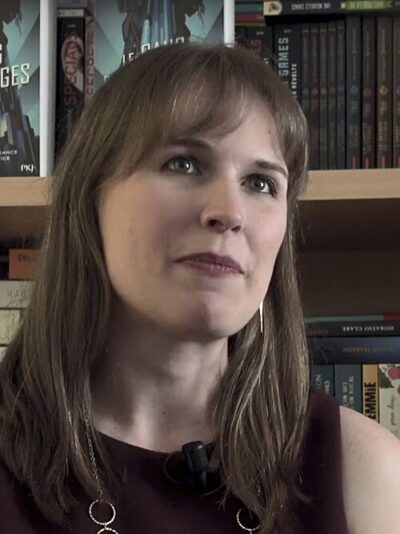
The Lunar Chronicles
The Lunar Chronicles is a literary series by Marissa Meyer.
- Written by
- Marissa Meyer
- Genre
- dystopian fiction
All 9 facts, and where they come from
Facts
9 facts · 0 confirmed by two sources · 0 cited · 9 from one source
Where this comes from
Papalocal keeps its own record. It started from these sources; what each one said is kept here as it was copied, so a change on their side never changes this page by itself. Tap one to read its version.
What Wikidata says · copied November 17, 2026 · revision 2566416161
- Described as
- literary series by Marissa Meyer
- Other names
- Lunar Chronicles
- What it is
- novel series; literary pentalogy
- Written by
- Marissa Meyer
- Genre
- dystopian fiction; fantasy; romantic fiction; young adult fiction
- Language
- English
- Official website
- http://www.marissameyer.com/the-lunar-chronicles/
- Wikipedias with a page
- 8
Wikidata item Q15139083 (wikidata.org/wiki/Q15139083), public domain (CC0). Copied 2026-11-17.
What Wikipedia says · copied November 17, 2026 · revision 1386208334
The Lunar Chronicles is a series of four young adult science fiction novels, a novella, and a short story collection written by American author Marissa Meyer and published by Feiwel & Friends. Each book entails a science fictional twist on a classic fairy tale, including "Cinderella", "Little Red Riding Hood", "Rapunzel", and "Snow White". Set in a futuristic world inhabited by various species and creatures, tensions are rising between Earth and its former colony Luna, while both attempt to manage an ongoing pandemic.
An animated feature film adaptation, to be produced by Warner Bros. Pictures Animation and Locksmith Animation and distributed by Warner Bros. Pictures, was announced in 2019 and will release on November 3, 2028.
From the Wikipedia article “The Lunar Chronicles” (en.wikipedia.org/wiki/The_Lunar_Chronicles), by its contributors, under CC BY-SA 4.0 (creativecommons.org/licenses/by-sa/4.0/). Copied 2026-11-17; not changed.
Confirmed Two sources agree. Cited One source, and it names where it got it. One source One source, without a reference of its own. Sources disagree The sources disagree. We show the best-supported value and keep theirs below.