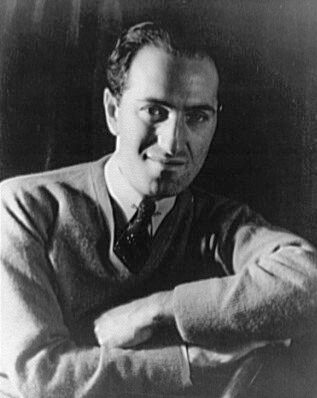
The Man I Love
The Man I Love is an original show tune written and composed by George and Ira Gershwin. It came out in 1924. It is performed by The King Cole Trio, Loleatta Holloway and Larry Adler.
- Came out
- 1924
- Performed by
- The King Cole Trio
All 8 facts, and where they come from
Facts
8 facts · 0 confirmed by two sources · 0 cited · 8 from one source
Where this comes from
Papalocal keeps its own record. It started from these sources; what each one said is kept here as it was copied, so a change on their side never changes this page by itself. Tap one to read its version.
What Wikidata says · copied November 16, 2026 · revision 2569288987
- Described as
- original show tune written and composed by George and Ira Gershwin
- Other names
- Man I Love, The Girl I Love
- What it is
- musical work/composition
- Performed by
- The King Cole Trio; Loleatta Holloway; Larry Adler; Barbra Streisand · 1 reference
- Music by
- George Gershwin · 1 reference
- Language
- English
- Came out
- 1924
- Wikipedias with a page
- 7
Wikidata item Q1828805 (wikidata.org/wiki/Q1828805), public domain (CC0). Copied 2026-11-16.
What Wikipedia says · copied November 16, 2026 · revision 1381945392
"The Man I Love" is a popular standard with music by George Gershwin and lyrics by his brother Ira Gershwin. Part of the 1924 score for the Gershwin musical comedy Lady, Be Good, the song was deleted from that show and put into the Gershwins' 1927 government satire Strike Up the Band (where it appears as "The Man I Love" and "The Girl I Love"), which closed out-of-town. It was considered for, then rejected from, the 1928 Florenz Ziegfeld Jr. hit Rosalie.
The song was used as the title of, and was prominently featured in, the 1947 film noir melodrama The Man I Love, starring Ida Lupino and Bruce Bennett.
From the Wikipedia article “The Man I Love (song)” (en.wikipedia.org/wiki/The_Man_I_Love_(song)), by its contributors, under CC BY-SA 4.0 (creativecommons.org/licenses/by-sa/4.0/). Copied 2026-11-16; not changed.
Confirmed Two sources agree. Cited One source, and it names where it got it. One source One source, without a reference of its own. Sources disagree The sources disagree. We show the best-supported value and keep theirs below.
Picture: Wikimedia Commons: The Man I Love.jpg · See Commons file page