The Marvelous Land of Oz
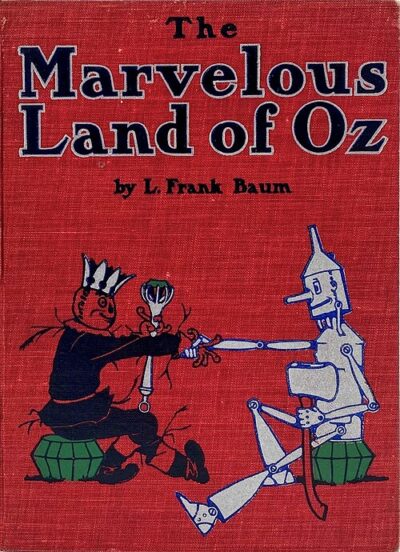
The Marvelous Land of Oz is a novel by L. Frank Baum. It came out in 1904. It is part of Oz book series.
- Published
- July 1904
- Written by
- L. Frank Baum
- Genre
- children's fiction
- Country of origin
- United States
All 11 facts, and where they come from
Facts
11 facts · 0 confirmed by two sources · 2 cited · 9 from one source
Where this comes from
Papalocal keeps its own record. It started from these sources; what each one said is kept here as it was copied, so a change on their side never changes this page by itself. Tap one to read its version.
What Wikidata says · copied November 16, 2026 · revision 2523295478
- Described as
- novel by L. Frank Baum
- What it is
- literary work
- Written by
- L. Frank Baum · 1 reference
- Publisher
- The Reilly & Britton Co.
- Genre
- children's fiction; fantasy
- Published
- July 1904 · 1 reference
- Language
- English
- Country of origin
- United States
- Part of the series
- Oz book series
- Comes after
- The Wonderful Wizard of Oz
- Followed by
- Ozma of Oz
- Wikipedias with a page
- 24
Wikidata item Q1659447 (wikidata.org/wiki/Q1659447), public domain (CC0). Copied 2026-11-16.
What Wikipedia says · copied November 16, 2026 · revision 1384226793
The Marvelous Land of Oz: Being an Account of the Further Adventures of the Scarecrow and the Tin Woodman, commonly shortened to The Land of Oz, published in July 1904, is the second book in L. Frank Baum's Oz series, and the sequel to The Wonderful Wizard of Oz (1900). This and the following 34 books in the series were illustrated by John R. Neill. It was followed by Ozma of Oz (1907).
The story features the Scarecrow and the Tin Woodman, and introduces Princess Ozma and Jack Pumpkinhead to the Oz mythos.
From the Wikipedia article “The Marvelous Land of Oz” (en.wikipedia.org/wiki/The_Marvelous_Land_of_Oz), by its contributors, under CC BY-SA 4.0 (creativecommons.org/licenses/by-sa/4.0/). Copied 2026-11-16; not changed.
Confirmed Two sources agree. Cited One source, and it names where it got it. One source One source, without a reference of its own. Sources disagree The sources disagree. We show the best-supported value and keep theirs below.
Picture: John R. Neill, via Wikimedia Commons · Public domain