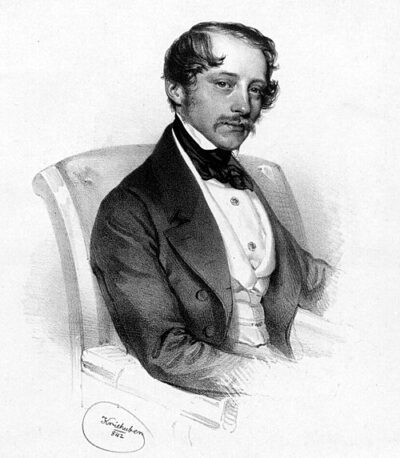
The Merry Wives of Windsor
The Merry Wives of Windsor is an opera by Otto Nicolai.
- Released
- 19th century
- Genre
- singspiel
All 7 facts, and where they come from
Facts
7 facts · 0 confirmed by two sources · 0 cited · 7 from one source
Where this comes from
Papalocal keeps its own record. It started from these sources; what each one said is kept here as it was copied, so a change on their side never changes this page by itself. Tap one to read its version.
What Wikidata says · copied November 17, 2026 · revision 2537483583
- Described as
- opera by Otto Nicolai
- Other names
- Die lustigen Weiber von Windsor, Merry Wives of Windsor
- What it is
- dramatico-musical work
- Music by
- Otto Nicolai
- Genre
- singspiel; Spieloper
- Released
- 19th century
- Language
- German
- Based on
- The Merry Wives of Windsor
- Wikipedias with a page
- 19
Wikidata item Q615663 (wikidata.org/wiki/Q615663), public domain (CC0). Copied 2026-11-17.
What Wikipedia says · copied November 17, 2026 · revision 1375305742
Die lustigen Weiber von Windsor, or The Merry Wives of Windsor, is an 1849 opera in three acts by Otto Nicolai to a German libretto by Salomon Hermann Mosenthal based on Shakespeare's play. Published as a comical-fantastical work in three acts with dance (komisch-phantastische Oper in 3 Akten mit Tanz), its structure is musical numbers linked by spoken dialogue, harkening back to the then-outmoded Singspiel format. It remains popular in Germany and Austria and its overture is sometimes heard in concert in other countries.
From the Wikipedia article “The Merry Wives of Windsor (opera)” (en.wikipedia.org/wiki/The_Merry_Wives_of_Windsor_(opera)), by its contributors, under CC BY-SA 4.0 (creativecommons.org/licenses/by-sa/4.0/). Copied 2026-11-17; not changed.
Confirmed Two sources agree. Cited One source, and it names where it got it. One source One source, without a reference of its own. Sources disagree The sources disagree. We show the best-supported value and keep theirs below.